



Pemphigus is an autoimmune skin disease in which the body’s immune system abnormally attacks skin cells (keratinocytes), gradually causing blistering, intercellular breakdown, and eventually skin and mucosal lesions. A rare subtype, pemphigus vegetans, is characterized by the development of vegetative lesions, raised plaques, and often in skin folds such as the groin and armpits. Early diagnosis is important because it can be mistaken for other conditions and may result in inappropriate treatment.
In this article, a full translation of a case report of pemphigus vegetans by Dr. Reza Moeini and colleagues is presented. The report shows how a case with an appearance very similar to condylomata acuminata (genital warts) was initially misdiagnosed, then confirmed by laboratory and pathological examination, and effectively treated. The original version of the article can be read on the Wiley website:
Read the full article on Wiley 
Case Report (Case Presentation)
A 41-year-old male patient presented to an infectious disease specialist with wart-like lesions. The lesions had started about 3 months earlier and were characterized by the appearance of multiple wart-like lesions measuring 1 to 2.5 cm, located bilaterally in the groin area (Figure 1). There was no discharge, burning, or itching in this area, and the patient stated that there was no pus or wound before the lesions appeared. The lesions were treated with several sessions of cryotherapy, but without success.
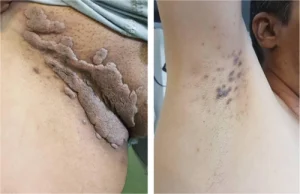
Figure 1 — Condyloma-like lesions in the groin and lichen planus-like lesions in the armpit, before treatment
To confirm the diagnosis of condyloma acuminata, an HPV PCR test was requested, which was negative . The patient was then referred to a dermatologist.
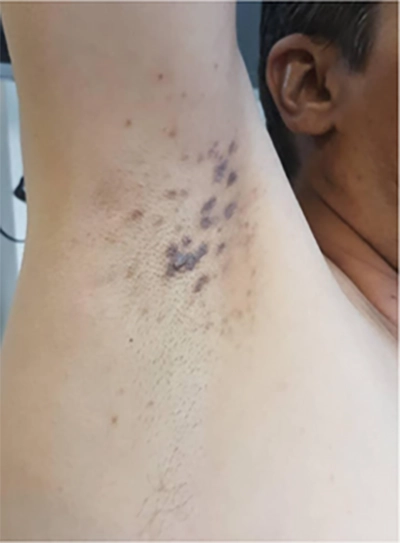
A full body examination revealed asymptomatic purple spots and papules in the armpit area. Several small mucosal ulcers were also observed in the mouth, which the patient stated had developed after the appearance of the groin lesions.
Given these findings, a possible diagnosis of pemphigus vegetans was suggested and a biopsy of the groin lesions was performed.
Pathology and immunofluorescence findings
The results of the histological examination showed:
Suprabasal clefts with acantholytic cells and eosinophils
Hyperkeratosis with focal parakeratosis
Marked acanthosis and sphingosis with eosinophilic microabscesses in the epidermis and hair follicles
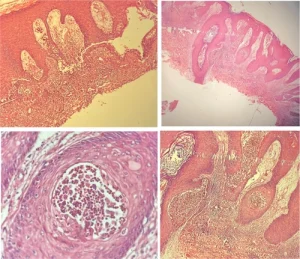
Figure 2 — Microscopic view of the lesion, confirming the diagnosis of pemphigus vegetans.
Direct immunofluorescence testing showed intercellular deposition of IgG in the lower layers of the epidermis, confirming the diagnosis.
Treatment and response to treatment
The patient was treated with oral prednisolone at a dose of 1 mg/kg body weight (60 mg/day). After two weeks of treatment, a very good response was observed, and the groin and axillary lesions had almost completely cleared.
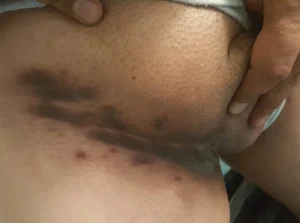
Figure 3 — Groin lesions after treatment, complete smoothing of lesions
The patient is now under control with low dose prednisolone and no recurrence has been observed as of the time of reporting.
Discussion
Pemphigus vegetans is a rare type of pemphigus. In some patients, the erosions tend to develop into granulation tissue and crusts, called vegetal lesions. These lesions are most often seen in the groin, armpits, thighs, hands, eyelids, and around the mouth. Two subtypes, Neumann and Hallopeau, are recognized, which are distinguished by clinical presentation, course, and response to treatment. Involvement of other body regions is very uncommon, although there have been reports of lesions limited to the feet, oral mucosa, lips, or toes. Lack of familiarity or lack of clinical suspicion may result in the diagnosis being missed.
In the present case, it was interesting that the patient did not complain of any oral lesions (lesions that could have been used as a clue to the correct diagnosis). This led to these lesions being overlooked and, consequently, the patient being treated incorrectly. Furthermore, the groin lesions were completely asymptomatic and had an appearance very similar to condylomata acuminata. In contrast, the axillary lesions had a purple, polygonal pattern reminiscent of lichen planus inversus.
In conclusion, we recommend that a complete skin and mucosal examination be performed in any patient presenting with suspicious wart-like lesions in the folds of the body. It is also necessary to use appropriate diagnostic methods before any therapeutic intervention in suspicious cases. In addition, factors such as a history of safe sexual intercourse, the presence of vegetative lesions only in the groin area (and not on the penis or testicles), and a family history of autoimmune diseases can help in reaching a more accurate diagnosis.
Conclusion
The report showed that pemphigus vegetans can be confused with other diseases such as genital warts (condylomata acuminata), which can lead to incorrect treatment. Therefore, a thorough examination of the skin and mucosa and the use of accurate diagnostic tests in suspected cases are essential to prevent treatment errors.
To read the full article, you can visit the Wiley website:
Read the full article on Wiley
Also, if you are looking for educational and analytical articles in various fields of medicine, beauty, and health, you can visit the beauty and health section of Azargah magazine:
Beauty and health section in Azargah