


Buccal fat surgery (lip fat removal)
Some people have naturally full or round cheeks, which may not be in harmony with the overall structure of the face. Buccal Fat Removal is an effective procedure to reduce the volume of fat deep in the cheek area, which results in more angularity and a more prominent facial bone structure. This surgery is usually suitable for people who are looking to reduce the volume of the cheeks and create a more balanced and elongated appearance.
What is buccal fat?
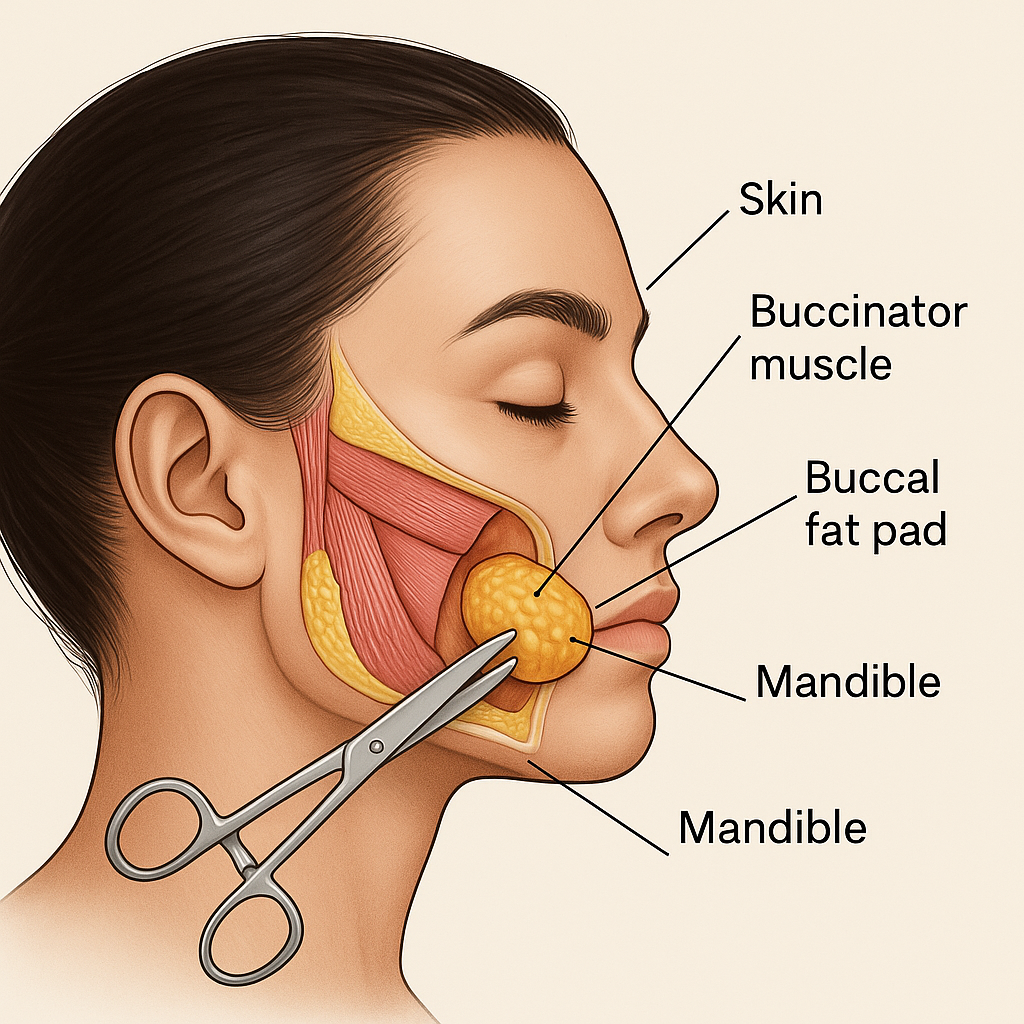
Buccal fat refers to the fat deposits deep inside the cheeks, located between the chewing muscles. The size of these deposits varies from person to person. People with larger buccal fat often have a rounder or more childlike face. These deposits cannot be reduced with diet or exercise, and can only be removed through surgery.
Suitable candidate for buccal fat surgery
Buccal fat surgery is suitable for people who:
They have round faces or very full cheeks.
Their cheek lines or jaw angles are not clear.
They are looking for facial angles.
They are generally healthy and have no specific diseases.
They do not smoke or can stop smoking before and after surgery.
They have realistic expectations of the outcome of their actions.
Their cheek tissue is suitable for fat removal.
This surgery is usually not recommended for people with thin faces or older people, as it may result in excessive sagging or thinning of the face.
Benefits of Buccal Fat Surgery
Increased definition of cheekbones and jaw
Reducing excess volume of species
Beautifying the face shape and creating natural angles
No external scar (incision is made inside the mouth)
Quick and easy to do, usually in less than an hour
No need for hospitalization
Short recovery period
Steps of surgery
Initial consultation: At this stage, the doctor evaluates the facial structure, tissue thickness, and the person’s overall health.
Anesthesia: Surgery is usually performed under local anesthesia, but general anesthesia can also be used if combined with other surgeries.
Intraoral incision: A small incision (about 2 to 5 centimeters) is made inside the mouth, next to the molars.
Fat removal: By accessing the buccal area, fat is carefully removed and, if necessary, the two sides are adjusted to achieve symmetry.
Sutures and discharge: The incision site is closed with absorbable sutures and the patient returns home without the need for hospitalization.
Pre-surgical care
Stop taking aspirin, vitamin E, and blood thinners at least one week before surgery.
Maintaining oral hygiene and using mouthwash
Avoiding tobacco use
Information about any type of disease or medication being taken
Post-surgery care
Use a cold compress for the first 48 hours.
Consume soft, cool, and watery foods for the first few days.
Using an antiseptic mouthwash after each meal
Taking antibiotics and painkillers as prescribed by your doctor
Avoiding strenuous activities or sleeping on your face
Strictly abstain from smoking for better recovery
Adhering to follow-up sessions to check the status of the stitches and repair
Possible complications
Although this surgery is considered relatively safe, like any other surgery, it may be associated with complications, including:
Temporary swelling or bruising
Pain or discomfort in the surgical area
Possibility of infection or bleeding
Sagging cheeks if too much fat is removed
Asymmetry of the cheeks
Possible damage to the cheek muscles or surrounding nerves (rare)
By choosing a specialist surgeon and following careful care, most of these complications can be prevented or controlled.