


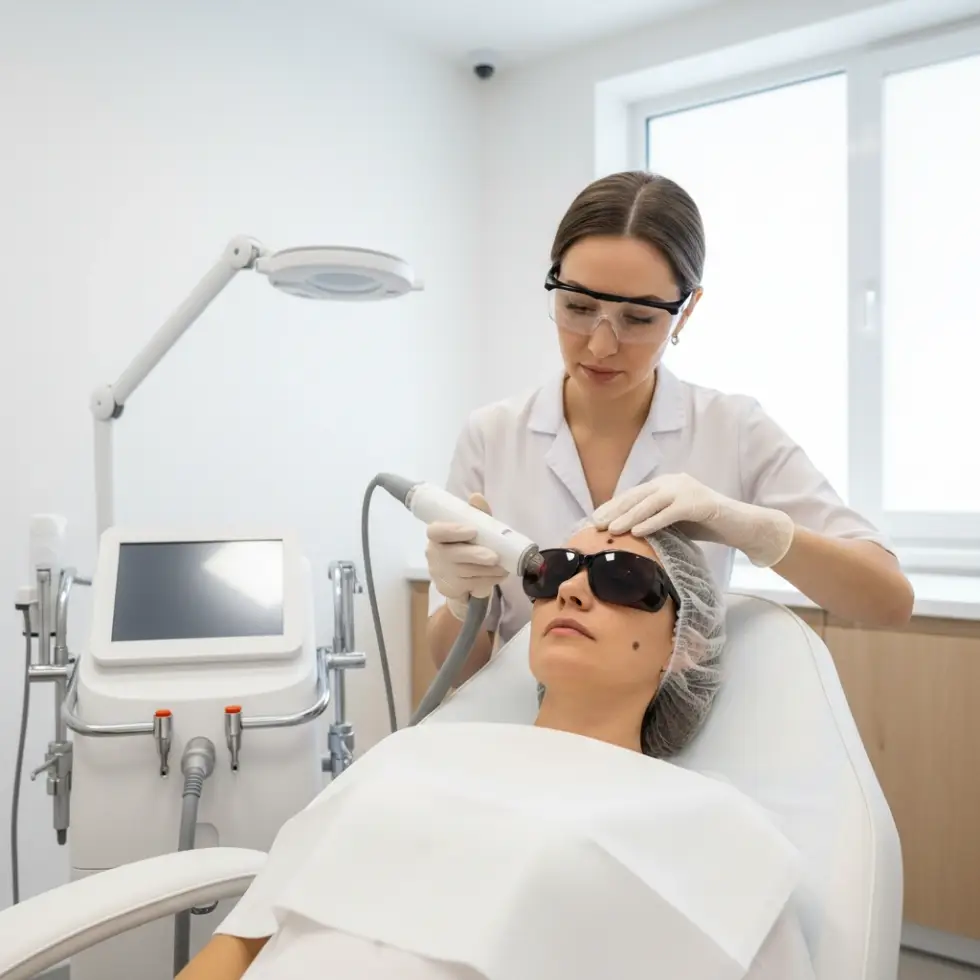
The skin, the largest organ of the human body, plays an important role in protecting the body from external factors, regulating temperature and maintaining moisture. Over time or due to various factors such as genetics, sunlight, diseases and injuries, the skin undergoes various changes and lesions. These lesions can be problematic in terms of beauty and skin health. Fortunately, with the advancement of technology, new methods such as laser therapy are available to treat many skin lesions.
This article examines skin lesions that can be treated with lasers, types of lasers, benefits, limitations, and post-treatment care.
Laser and its application in the skin
Laser is an abbreviation for Light Amplification by Stimulated Emission of Radiation. A laser is a type of focused light with a specific wavelength that has a lot of energy and can directly affect cells and tissues. This feature allows lasers to be used to treat skin lesions , rejuvenate the skin, reduce blemishes, and remove unwanted hair.
Laser effect mechanism
Lasers are absorbed by specific tissues depending on their wavelength:
- Water: Water-based lasers are useful for removing superficial tissue and stimulating collagen.
- Melanin (skin pigment): Used to treat spots and pigmented lesions.
- Hemoglobin: Used to treat vascular lesions such as spider veins and small varicose veins.
This property makes laser treatment precise, targeted, and minimally invasive.
Types of skin lesions treated with lasers
Laser therapy is one of the most effective methods for treating a variety of skin lesions due to its high precision and selective targeting of cells and pigments. Skin lesions that can be treated with lasers can be divided into several main categories:
1. Skin blemishes and dark spots
Skin spots or discoloration are usually the result of an excess accumulation of melanin in certain areas of the skin. The main types of spots are:
Solar Lentigines / Sunspots
- Cause: UV light damage stimulates melanocytes and causes them to overproduce melanin.
- Common locations: face, hands, and shoulders.
- Clinical signs: Small brown to dark spots that increase in size over time.
- Laser treatment: Q-Switched Nd:YAG and fractional lasers are effective by breaking down pigments and stimulating skin regeneration. Treatment sessions usually last 2 to 4 sessions, depending on the depth of the spots.
Hormonal spots or melasma (Melasma / Chloasma)
- Cause: Hormonal changes (pregnancy, birth control pills), genetics, and stress.
- Common locations: forehead, cheeks, upper lip.
- Clinical signs: Irregular brown or gray spots.
- Laser treatment: Q-Switched laser combined with lightening creams and sunscreen. To prevent the spots from returning, multiple sessions of treatment and hormonal control are recommended.
Age Spots (Age Spots / Lentigo senilis)
- Cause: Aging, decreased cell regeneration, melanin accumulation due to prolonged UV damage.
- Laser treatment: Fractional and CO₂ lasers for superficial exfoliation and stimulation of collagen production, reduce the severity of blemishes and improve skin texture.
- Scientific explanation: Lasers with specific wavelengths target melanin and break it into tiny particles, which are then absorbed and eliminated by the body’s immune system. This mechanism results in a more even skin tone.
2. Acne & Acne Scars
Acne scars are a common skin problem that is caused by inflammatory or genetic reasons. Types of acne scars include:
Ice-pick scars
- Appearance: Small, deep holes in the skin.
- Mechanism: Severe inflammation of the hair follicle causes tissue destruction and perforation.
- Laser treatment: Fractional CO₂ laser penetrates deep into the scar, stimulating collagen production and tissue regeneration.
Rolling scars
- Appearance: Shallow, widespread depressions that make the skin appear uneven.
- Laser treatment: Fractional erbium or CO₂ laser to resurface and smooth the skin.
Hypertrophic / Keloid scars
- Appearance: Abnormal bumps at the site of the boil or wound.
- Cause: Overproduction of collagen and abnormal tissue growth.
- Laser treatment: PDL (pulsed dye) laser to reduce inflammation and tissue volume, sometimes combined with topical steroid injections.
- Clinical Note: Combining laser with other methods such as microneedling and drug therapy can improve treatment outcomes.
3. Moles & Warts
Moles and warts are often removed for cosmetic reasons or medical risks:
Skin Tags / Acrochordons
- Appearance: Small, soft bumps, skin-colored or brown.
- Cause: Skin friction, obesity, genetic factors.
- Laser treatment: CO₂ laser with precise removal and minimal scarring.
Warts (Warts / Verruca vulgaris)
- Appearance: Hard, sometimes rough bumps on the hands, feet, or face.
- Cause: HPV virus.
- Laser treatment: CO₂ laser and pulsed dye laser to remove infected tissue and prevent recurrence.
Congenital / Pigmented Moles
- Appearance: Brown or black moles from birth.
- Laser treatment: Q-Switched laser to reduce the color and size of the mole, along with specialized evaluation for the possibility of malignancy.
4. Vascular Lesions
These lesions are caused by the dilation of small skin vessels:
Spider veins (Spider veins / Telangiectasia)
- Appearance: Small red or blue lines on the face and legs.
- Laser treatment: The ND:YAG laser and pulsed dye laser (PDL) absorb blood from the veins and cause them to close. Treatment usually requires several sessions.
Port-Wine Stain
- Appearance: Congenital red to purple spots that darken with age.
- Laser treatment: Pulsed dye laser (PDL) to reduce the color and volume of the spot and prevent skin thickening.
5. Age-related damage and wrinkles
In addition to treating specific lesions, lasers are also used to rejuvenate the skin and reduce wrinkles:
- Fractional CO₂ or Erbium laser: By creating controlled heat, collagen and elastin production is stimulated, making the skin firmer and more youthful.
- Non-ablative laser: Increases collagen production and reduces fine lines without damaging the skin surface.
6. Surgical and burn scars
- Appearance: Scars, depressions or bumps after surgery or burns.
- Laser treatment: Fractional laser is effective for resurfacing the skin, reducing sagging, and evening out skin tone.
- Laser advantage: Compared to traditional methods, there is less damage to the surrounding skin and a faster recovery period.
3. Types of lasers commonly used in the treatment of skin lesions
1. CO₂ laser
- Application: Acne scars, moles, scars and wrinkles
- Advantage: High precision, collagen stimulation
- Limitations: Long recovery period, possible skin discoloration
2. Erbium laser
- Application: Mild acne scars, superficial peeling, fine wrinkles
- Advantage: Minimally invasive, rapid recovery
- Limitation: Does not treat deep lesions
3. Q-Switched Laser
- Application: spots, colored moles, tattoos
- Advantage: Targeted on pigments, minimal damage to the skin
- Limitations: Requires multiple sessions for deep lesions
4. Pulsed Dye Laser (PDL)
- Uses: Spider veins, port-wine stains, red scars
- Advantage: Precise targeting of veins, minimal damage to surrounding skin
- Limitations: Multiple sessions required, temporary swelling
5. ND:YAG laser
- Application: Thick veins, unwanted hair, stubborn stains
- Advantage: Deep penetration, suitable for dark skin
- Limitations: Several sessions required, need for physician experience
6. Fractional laser
- Application: Acne scars, scars, wrinkles, skin rejuvenation
- Benefit: Stimulate collagen, improve skin texture
- Limitations: Multiple treatment sessions, post-laser care required
Benefits of laser treatment of skin lesions
1. Precise and targeted: Damage to surrounding tissues is minimal.
2. Minimally invasive: Does not require open surgery or stitches.
3. Short recovery period: Faster recovery than traditional methods.
4. Reducing the risk of infection: Because the method is sterile and non-invasive.
5. Long-term results: Especially for pigmented lesions and spider veins.
To see pictures of people who have achieved the desired results for laser treatment of skin lesions, you can visit Dr. Reza Moeini’s Instagram page.
Limitations and possible complications
Despite its benefits, laser treatment has limitations and complications:
- Possible temporary redness and swelling after treatment
- Possible temporary or permanent skin discoloration
- Requires multiple treatment sessions for full results.
- Higher cost than some traditional methods
For some deep or very large lesions, laser may not be enough and complementary methods may be necessary.
Laser aftercare
To achieve the best results and reduce complications, it is essential to follow post-treatment care:
- Using repairing and moisturizing creams
- Avoid direct sunlight until the skin heals.
- Avoid scratching or manipulating the treatment area.
- Using appropriate sunscreen to prevent new spots
- See a doctor if you notice unusual swelling or infection.
Conclusion
Laser therapy is a modern, precise and effective method for treating a variety of skin lesions. From blemishes, acne, moles, warts, spider veins to wrinkles and surgical or burn scars, lasers can provide significant results by precisely targeting tissues and stimulating collagen. Consulting with an experienced specialist surgeon, Dr. Reza Moeini, can be the first step to making the right decision.
By choosing the right type of laser and following post-treatment care, healthy, clear, and even skin can be restored. With advances in technology, laser treatment of skin lesions is becoming more precise, safer, and more convenient, replacing many traditional methods.
If you are interested in specialized and interesting content in the field of beauty and health, we suggest you visit Azargah magazine and benefit from its diverse articles.