



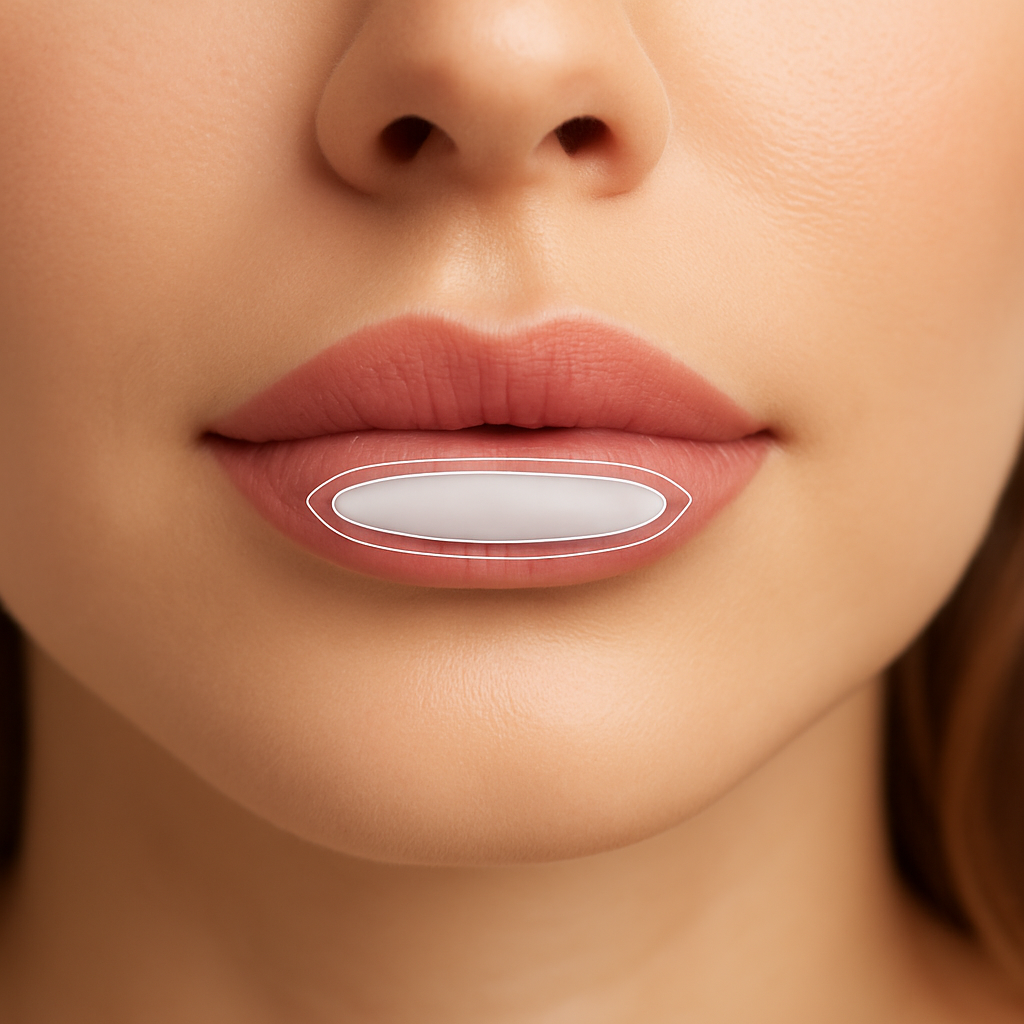
What is lip prosthesis surgery?
Lip augmentation surgery is a procedure in which a soft, flexible, and biocompatible implant is placed inside the lips to permanently increase the volume, symmetry, and shape of the lips, bringing them closer to their natural shape. Unlike injectable fillers that require refills every 6 to 12 months, lip augmentation provides a long-term or semi-permanent result and can be removed if needed. This procedure is suitable for people who want to avoid repeated injections and are looking for a long-lasting solution.
Why do people go for lip implants?
Permanent or long-term lip volume enhancement without repeated injections. Create symmetry in asymmetric or thin lips. Improve facial proportions and improve self-confidence. A good option for those who are tired of repeated fillers or do not respond well to them.
Types of lip prosthesis materials
Soft silicone (like today’s common prostheses): The most common type; soft, flexible, and designed in different sizes to better fit the lip. Can be removed if there is dissatisfaction or complications. ePTFE (expanded polytetrafluoroethylene): A biocompatible material that allows tissue growth into its structure and can increase the stability of the placement. There are also tissue alternatives such as fat grafting or soft tissue, which have natural results and last for many years, but their fat absorption rate varies.
Lip augmentation compared to other volume augmentation methods
Hyaluronic acid fillers are minimally invasive and injectable and last between 6 and 12 months. These fillers can be dissolved with enzymes if needed and are a good option for initial volume testing. Fat grafting involves removing fat from the body and lasts for several years, but the amount of absorption varies. Lip lift is a local, structural surgery that has a permanent result and is used to shorten the distance from the lip to the nose. Lip prosthesis is performed with a short surgery, has a long-term duration, and can be replaced or removed if needed.
Who is a good candidate for lip augmentation?
People who are in good general health, do not have uncontrolled chronic disease, do not smoke or are willing to temporarily quit, do not have an active oral infection (such as herpes), have sufficient lip tissue to cover the prosthesis, and have realistic expectations of the outcome of the procedure are suitable candidates for this surgery.
Lip prosthesis surgery steps (step by step)
In the first stage, a consultation and assessment is performed; the patient’s lip size, symmetry, tissue thickness, and aesthetic goals are examined, and the appropriate implant size is selected. Then, in the preparation stage, it is recommended to stop smoking, blood thinners, and supplements for a while. On the day of the operation, local anesthesia with sedation is usually used. The surgeon makes small incisions in the corners of the mouth and creates a channel in the lip through which to place the implant in place. After the implant is stabilized and symmetry is ensured, the incisions are closed with fine sutures, and the patient is discharged with aftercare recommendations.
Length of surgery and recovery period
The duration of the surgery is usually between 30 and 60 minutes and may vary depending on whether one or both lips are being operated on. Swelling and mild bruising are normal for the first few days. Most people return to light daily activities within a week. It may take several weeks for the swelling to completely subside, and the implant tissue will soften and become more natural over the first few months.
Post-surgery care
Using a cold compress for the first 48 hours is very helpful to reduce swelling. It is best to keep the head elevated for the first few nights. The patient should avoid pursed or pressed lips and avoid eating hot or spicy foods. Prescribed medications such as antibiotics and painkillers should be taken as directed. Follow-up visits are necessary to examine and check the position of the implant and remove stitches if necessary.
Results and durability
Lip implants are designed to last long and, unlike fillers, do not require renewal. In case of dissatisfaction or problems, it is possible to remove or replace the prosthesis. This flexibility is one of the important advantages of this method. It is also more economical in the long run, since there is no need for repeated injections.
Benefits
Uniform and permanent increase in lip volume, precise selection of size (soft, medium, full), only one surgery, possibility of removal if needed, improvement in the shape and symmetry of the lips and face are among the most important benefits of lip prosthesis.
Limitations and possible complications
In some cases, the patient may experience complications such as swelling, bruising, temporary numbness, displacement or protrusion of the prosthesis, a feeling of tightness or touch at the edge of the implant (especially in very thin lips), or internal scarring. Infection may also occur in rare cases, which can be controlled with medication. Following the doctor’s recommendations and choosing an experienced surgeon will minimize the likelihood of these events.
When is lip prosthesis not recommended?
In people with very thin lips and not enough tissue to cover the implant, or those with exaggerated expectations of lip volume, procedures such as gradual fillers or lip lifts are usually recommended. Also, if there is active inflammation or sores in the mouth area, this surgery is postponed until complete healing.
Frequently Asked Questions
Are lip implants permanent?
Yes, it is designed to last long, but can be removed or replaced if needed.
When will I see the final result?
Initial swelling will subside within a week or two, and the final shape of the lips will usually be determined within a few weeks to a few months.
Can I remove the implant if I regret it later?
Yes, this surgery is reversible.
Are lip implants dangerous?
This procedure is very safe and reliable if you choose a specialist surgeon and follow post-operative care.