



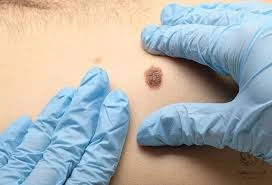
Skin cancer and its treatment methods
What is skin cancer?
Skin cancer is the abnormal growth of skin cells that is usually caused by too much sun exposure, but common types of this cancer can even occur on areas of your skin that aren’t exposed to the sun. The average age of onset for skin cancer is 65. However, it can also occur at younger ages, especially melanoma (the worst type).
Main types of skin cancer
We have 3 main types of skin cancer: basal cell carcinoma (BCC), squamous cell carcinoma (SCC), and melanoma.
Of the three, BCC is the least dangerous and melanoma is the most dangerous. BCC is the most common type of skin cancer.
Basal cell carcinoma (BCC)
It starts with basal cells, which are a type of cell within the skin that produces new skin cells when old skin cells die.
Basal cell carcinoma (BCC) often appears as a clear bump on the skin, but it can also take other forms. This form of skin cancer often develops on areas of the skin that are exposed to the sun, including the head and neck.
Most BCCs are caused by long-term exposure to ultraviolet (UV) rays. Staying out of the sun and using sunscreen may help protect you from this type of skin cancer.
Squamous cell carcinoma (SCC)
It is a common type of skin cancer that develops in the cells that make up the inner, middle, and outer layers of the skin. These cells are called squamous because of their shape.
It is usually not life-threatening, but it can be aggressive and dangerous. If left untreated, squamous cell carcinoma can spread to other parts of your body and cause serious problems.
Most squamous cell carcinomas are caused by exposure to ultraviolet (UV) radiation.
Melanoma
The most serious type of skin cancer is melanoma, which develops in the cells that produce melanin (melanocytes), the pigment that gives your skin its color. Melanoma can also form in your eyes and, rarely, inside your body, such as your nose or throat.
The exact cause of melanoma skin cancer is unknown, but exposure to ultraviolet rays from sunlight or the use of tanning lamps and beds increases your risk of developing skin cancer.
Symptoms of skin cancer
The symptoms of skin cancer are not particularly different in men and women. Below, we explain the symptoms of the three main types of skin cancer.
Signs and symptoms of melanoma skin cancer
Melanoma looks different in different people. Melanoma usually appears as an abnormal mole anywhere on the skin; a mole is a common, noncancerous growth that is usually small and round or oval in shape and is usually brown, tan, or pink. It may be raised or flat, and most people have several moles. A change in the color, size, or shape of a mole is usually the first sign of skin cancer. These changes may occur in a mole that you already have on your skin or as a new mole. Other health problems can also look similar to melanoma skin cancer.
The signs and symptoms of melanoma skin cancer are usually expressed using the acronym ABCDE:
- Mole color (C or Color) – When the color of the outer and inner parts of the mole is not the same and has different shades of color such as tan, brown, and black, and sometimes even parts of the mole may be blue, gray, red, pink, or white.
- Asymmetry (A or Asymmetry) – When one half of the mole does not have the same shape as the other half and the mole is not symmetrical.
- Change in mole characteristics (E or Evolution) – A change in the color, size, shape, or texture of a mole. The mole may itch or feel tingly or burning.
- Border (B) – The border of the mole is irregular and uneven. In this case, the border of the mole may be jagged or fuzzy, and the color of the mole may have spread to the area around the mole.
- Radius (D or Diameter) – The size of the mole is greater than 6 mm (about the size of a pencil eraser).
Other signs and symptoms of melanoma include:
- An area that does not improve
- An area of skin with an open wound (ulcer)
- A mole or wound that is pus-filled or bleeding.
Signs and symptoms of BCC skin cancer
Basal cell carcinoma (BCC) usually occurs on parts of the body that are exposed to the sun, but it can sometimes occur in other places.
Symptoms of BCC:
- A sore that either does not heal or reappears after treatment and may be pus-filled or crusty.
- The growth is pink with raised edges and a sunken center with unusual blood vessels, resembling the spokes of a wheel.
- An appendix that bleeds suddenly and without manipulation or stimulation.
- A raised, red sore that itches.
- A flat, wide area that looks like a pale or colorless wound.
- A small pink or red bump that is shiny, pearly, or clear and may have black, blue, or brown areas.
Signs and symptoms of SCC skin cancer
The most common signs and symptoms of SCC skin cancer include:
- An open wound with raised edges
- A red, rough, hard patch
- Wart-like growths
- A horn-shaped appendage
- A growth that is firm and doubles in size within a few weeks
- A hard, dome-shaped appendage
- A wound that develops within an old wound.
- A growth that spreads to other parts of the body
These symptoms may develop on the penis, in which case they are often associated with the human papillomavirus (HPV).
People who have had solid organ transplants may be more likely to develop skin cancer, and this is due to the immunosuppressive drugs they take.
The cause of skin cancer
Most skin cancers are caused by damage to the skin from sun exposure; in fact, the most common cause of skin cancer is sunlight. This damage may be the result of prolonged sun exposure or a history of sunburn.
People who have a history of sunburn as children are also more likely to develop BCC and SCC skin cancers.
Risk factors for SCC and BCC skin cancer
Over the past 30 years, the number of women and men diagnosed with skin cancer has increased. The risk of developing skin cancer increases with age, but it can also be found in young people and adolescents (ages 15 to 29).
In this section, we have listed the risk factors for skin cancer in order from most important to least important. However, in most cases, it is not possible to classify all of them with certainty. Risk factors for skin cancer include the following:
- Congenital melanocytic moles
- UV rays
- Having unusual moles
- Mutations in the CDKN2A gene
- Light skin, hair, and eyes
- Familial atypical multiple melanoma syndrome (FAMMM)
- Personal history of skin cancer
- Other hereditary conditions
- Weakened immune system
Possible causes of melanoma skin cancer
The following are some possible risk factors for melanoma skin cancer, but it is not yet clear whether these risk factors definitely cause cancer. More research is needed to determine the role of these factors in cancer:
- Ionizing radiation
- PUVA treatment
- Mutations in the melanocortin receptor gene
- Working with products that contain a group of chemicals called polychlorinated biphenyls (PCBs)
- Tallness in adults
Family history of skin cancer
Melanoma can run in families. In fact, about 10 percent of melanoma patients have a family history of melanoma. If one or more close relatives—parents, siblings, or children—have melanoma, you have a higher chance of developing the disease.
Skin cancer treatment
You and your specialist will decide on the best treatment for you and then you will have this treatment. Your doctors can talk to you about things you need to consider as you go through your treatment.
Most people with basal cell carcinoma (BCC) or squamous cell carcinoma (SCC) are treated using these methods:
Surgery
Surgery is the most common treatment for skin cancer. Several types of surgery may be used to treat skin cancer.
Cryotherapy
Cryotherapy uses liquid nitrogen to freeze and destroy cancer cells. It is a quick way to treat actinic keratoses and other low-risk, small skin cancers, including certain types of BCC.
Photodynamic therapy ( PDT )
Photodynamic therapy uses light sources in combination with photosensitizing drugs to destroy cancer cells.
- An immunotherapy ointment called imiquimod can be used to treat primary and superficial BCCs.
- Chemotherapy ointment contains a drug called fluorouracil or 5FU and can be used to treat superficial, early BCCs.
Radiotherapy
We may use radiotherapy instead of surgery for BCC and SCC. We do this when surgery is not possible or when surgery may damage surrounding tissue and change your appearance. Sometimes we may use this treatment after surgery to kill any cancer that may still be present.

You can also read ( Hair cyst and ways to treat it ).
Types of biopsies to diagnose skin cancer
We can’t always tell the difference between cancer and noncancerous conditions by examining your skin. Your doctor may suggest taking a sample of your skin (a biopsy). This is a simple procedure that you can do in an outpatient setting and is the most definitive test for skin cancer.
First, you will receive local anesthesia, and then part or all of the affected area will be removed and sent to a laboratory, where a doctor who specializes in analyzing cells (a pathologist) will look at the sample under a microscope.
Different types of biopsies are used to diagnose skin cancer, and if you require stitches after your biopsy, your stitches will be removed after a few days.
Types of biopsies to diagnose skin cancer include:
- Incisional biopsy: The doctor uses a scalpel to remove a small sample of part of the abnormal area.
- Excisional biopsy: The doctor removes the entire abnormal area and a small margin of healthy tissue around it. In this case, the incision is made around and outside the lesion, rather than through it.
- Punch biopsy: The doctor uses a sharp, round instrument to remove a sample of the patient’s skin.
- Shave biopsy: In this type of biopsy, the top part of the affected area of skin is removed and the resulting wound forms a scab and heals without the need for stitches.
Skin cancer prevention
Making the use of sun protection a daily habit will reduce your chances of developing skin cancer.
Most skin cancers are caused by exposure to the sun’s UV rays. UV rays come from the sun, tanning beds, and sunlamps and can damage your skin.
Sun protection
Protecting yourself from ultraviolet (UV) rays is important all year round, not just during the summer. UV rays can reach your skin even on cloudy or cool days and can be reflected off surfaces like water, concrete, sand, and snow.
Do the following to protect your skin from the sun:
- Wear sunglasses.
- Wear a hat with a wide brim to shade your face, head, ears, and neck.
- Wear clothes that cover your arms and legs.
- Stay in the shade.
- Use a good sunscreen with an SPF of at least 30 or higher.
Other sun safety tips include:
- Avoid tanning indoors (very important!)
- Using tanning methods, including beds, lamps, etc. to darken the skin, causes exposure to large amounts of UV radiation, and over time, this high exposure can cause skin cancer, cataracts, and eye cancers.
When UV rays reach the lower layers of the skin, they cause more melanin to be produced in the skin, and this melanin moves to the outer layers of the skin and appears as a dark skin color. Any change in skin color after exposure to UV rays indicates damage to the skin, not its health!
Indoor tanning can lead to serious injuries, and the number of accidents related to this work and people who suffer burns after tanning and go to the emergency room is about 3,000 people per year.
When should we see a specialist ?
You may be wondering when you should see a doctor. The short answer is that you should see a doctor when you notice a new skin lesion or mole that fits the criteria for skin cancer listed at the beginning of this article. Recognizing new moles or lesions is key to early detection of skin cancer.