



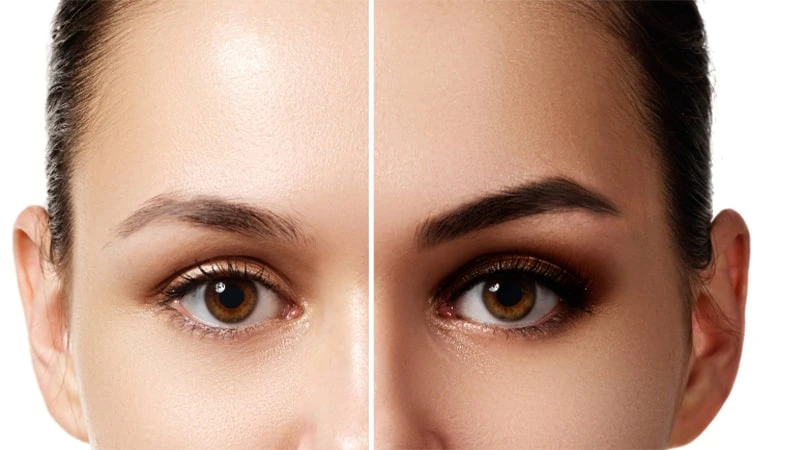
Eyebrow transplantation is an aesthetic procedure that helps to design and create the proper shape and shape of your eyebrows. Using this method increases the beauty of the face, thickens the eyebrows, and restores the shape of the eyebrows. In this article, we will discuss the complete steps of eyebrow transplantation and the benefits and complications of this method.
Eyebrow transplant steps
Eyebrows are one of the most important parts of the face in the beauty of every person’s face, and eyebrow transplant surgery has a tremendous impact on facial beauty. To understand what eyebrow transplantation is and how it is performed, it is necessary to familiarize yourself with its steps. Below, we will explain the steps of eyebrow transplantation in detail.
1. Consulting and planning
This stage involves meeting with a dermatologist and designing the shape of your eyebrows based on your needs and suggestions. During this session, you can express your expectations and goals for eyebrow transplantation and talk to the specialist about the shape, length, and color of your eyebrows.
2. Preoperative education and guidance
Before undergoing eyebrow transplantation, the specialist will give you instructions on limitations and precautions to follow. This includes avoiding medications and substances that may interfere with the procedure, and recommendations for post-operative care.
3. Eyebrow shape design
At this stage, the precise design of the eyebrow shape is done based on the facial contours using special tools. This design can be done manually or using 3D facial modeling methods for greater accuracy.
4. Preparing the planting area
At this stage, your eyebrows are prepared for transplantation. This stage includes cleaning and disinfecting the transplantation area, applying special materials to facilitate transplantation, and preparing the hair bank prior to transplantation.
5. Choosing an eyebrow transplant method
At this stage, you should choose the best method for transplanting your eyebrows with the help of a specialist doctor. In fact, your doctor will provide you with suggestions based on the conditions of the hair bank, the available tools, and all aspects, and you will choose a suitable method with the help of your specialist doctor.
6. Postoperative care training
After eyebrow transplantation, you need to take care of the transplanted eyebrows. At this stage, the specialist will talk to you about the use of medications, moisturizers and various care. It is very important to avoid pressing, scratching or pulling out the hair from the transplanted area at this stage.
Different eyebrow transplant methods
Eyebrow transplantation is performed in various ways. Below you can learn about the different methods of eyebrow transplantation.
Eyebrow transplantation from scalp hair
In this method, hair collected from other areas of the head is transplanted into the empty areas of the eyebrows. This method is usually used for people who have incomplete, thin or weak eyebrows. The surgeon transfers the hair along with its follicles from the scalp to the eyebrow area. This allows your new hair to grow in the eyebrows. This method usually uses general anesthesia. In it, the specialist doctor first completely anesthetizes the person with anesthesia, then makes small incisions in the follicle donor sites as well as in the graft sites in your eyebrows. The entire process takes about 2 to 3 hours. Natural eyebrow transplantation is usually done in two ways, which are mentioned below.
Eyebrow transplantation using the FUE method
In this method of hair transplantation, hair follicles are removed from the donor site with the help of a special device and transplanted. In this method, a small scar remains on the donor site, but the hair transplant process is a bit slow and long.
Eyebrow transplantation using the FUT method
In this method, a section of hair from the back of the head is used for transplantation. In fact, a specialist doctor removes a section of the person’s hair along with its follicles and then places it in the eyebrow. This method is faster than the FUE method, but it has a larger scar and a longer recovery period.

Benefits of eyebrow transplantation
1. Enhance facial beauty
Eyebrow transplantation can improve the overall appearance of the face and enhance beauty. Full and well-groomed eyebrows play an important role in facial balance and beauty.
2. Strengthening and restoring thin eyebrows
People with thin, pale eyebrows can use it to add thickness and darkness to them.
3. Solving the problems of damaged eyebrows
Eyebrows that have been damaged due to various reasons, such as illness, injury, or radiation therapy, can be healed and regain their natural shape and condition.
Side effects of eyebrow transplantation
- Inflammation and redness: After eyebrow transplantation, the transplanted area may be affected by inflammation and redness. These symptoms usually resolve naturally in the first few days after the procedure.
- Sensitivity and Allergies: Some people may be sensitive or allergic to the adhesive or the materials used in it. If you experience symptoms such as itching, swelling, or severe redness, you should see your healthcare professional.
- Unnatural result: In some cases, the result of the procedure may have an unnatural appearance, for example, the shape, length, or color of the eyebrows is not desirable. In this case, correction is required.
Post-eyebrow transplant care
Proper care after eyebrow transplantation is very important for the outcome of the procedure. Below are some of the most important post-eyebrow transplantation care tips.
1. Not touching or pulling out hair
Avoid touching the implanted area for the period of time determined by your specialist. Excessive touching of the implanted area can cause hair to detach and the implant to fall out.
2. Use prescribed moisturizers
Your specialist may prescribe special moisturizers for you. Use these moisturizers to keep the implant area moist and prevent dryness.
3. Prevent the planting area from getting wet.
In the first few days after eyebrow transplantation, you should avoid getting the transplanted area wet. Avoid using hot water in the shower and contact with water in the transplanted area.
4. Avoid sunlight
It is best to avoid sunlight and tanning beds for the period of time your specialist has prescribed. Sunlight can irritate the implant area and cause problems.
5. Avoid strenuous exercise
In the first few days after eyebrow transplantation, avoid strenuous exercise that causes excessive sweating. Excessive sweating may cause the transplanted hair to fall out.
Conclusion
Before deciding on eyebrow transplantation, it is important to consult a dermatologist and discuss your needs and expectations from the procedure. Also, make sure you are seeing a qualified and experienced specialist and be sure to follow the post-operative instructions to get the best results.