



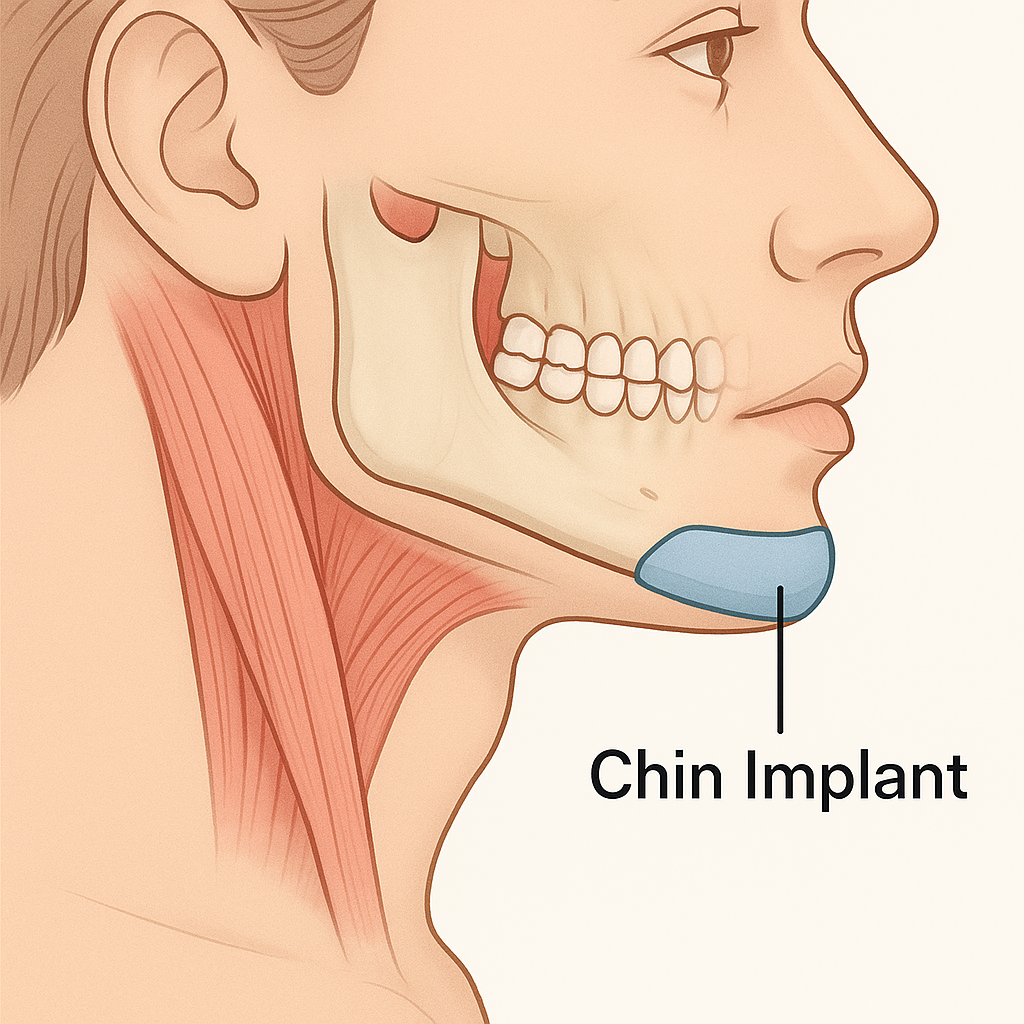
What is chin prosthesis surgery?
Chin Augmentation / Chin Implant Surgery is a cosmetic and reconstructive procedure performed to enhance the chin, correct facial proportions, and improve facial contours. In this procedure, a biocompatible implant is placed in the front of the chin bone (mentum) to increase the volume, angle, or length of the chin. This procedure is less invasive than jawbone surgery and provides a natural, long-lasting result. Chin augmentation surgery is especially beneficial for those who have a receding, weak, or small chin and want their overall facial appearance to appear more balanced.
Reasons for chin prosthesis
Creating balance between chin, nose, and lips in profile view
Strengthening the jawline and better shaping the lower angle of the face
Fixing a receding or sunken chin
A permanent alternative to temporary chin fillers
Increased self-confidence and satisfaction with one’s appearance
Benefits of chin prosthesis surgery
Long-term durability: Unlike fillers, implants do not require renewal.
Minimally invasive surgery: Usually performed in less than an hour and has a short recovery period.
Reversible: The implant can be easily removed or replaced if needed.
More proportion in the face: A more prominent chin makes the nose appear less prominent.
Simultaneous with other procedures: This procedure can be performed at the same time as rhinoplasty, facelift, or fat injection.
Disadvantages and challenges
Need for surgery, incisions, and stitches
Possible temporary bruising, swelling, or numbness in the lip or chin
Possibility of displacement or dissatisfaction with the final form if the wrong implant is chosen
Higher initial cost than filler, but more cost-effective in the long run
Limitations in certain cases, such as very narrow chins or thin skin
Types of chin implants
1. Solid Silicone:
The most common type of implant, it is soft, flexible, biocompatible, and removable. It comes in various sizes and is available in many clinics.
2. ePTFE (expanded polytetrafluoroethylene):
has a porous structure for natural tissue growth within the implant; high stability and greater adhesion to surrounding tissues.
3. 3D custom implant:
Designed with the help of a 3D scan of the patient’s face; suitable for specific corrections, congenital anomalies, or severe asymmetry.
Complete steps of chin prosthesis surgery
Consultation and design:
Examination of the angles of the face, jaw, nose, and lips; selection of the type and size of implant appropriate to the patient’s aesthetic goal.Preoperative preparation:
Stop taking blood thinners, smoking, and certain supplements at least two weeks before surgery. Oral hygiene is very important in cases of intraoral incisions.Type of anesthesia:
local anesthesia with sedation, or general anesthesia (if combined with other surgeries).Creating a cut:
This can be done in two possible ways:Intraoral incision: no external scar
Submental incision: Small, hidden scar in the crease under the chin
Implant placement:
The implant is carefully placed through tunneling into the submuscular layer and onto the meniscus bone and secured in position.Sutures and dressings:
The incisions are sutured with absorbable or non-absorbable sutures, and a light dressing is applied to protect the implant.
Recovery period and post-operative care
Using cold compresses in the first 48 hours
Sleeping with your head elevated
Avoiding blows to the chin or direct pressure
Maintaining oral hygiene for intraoral incisions
Taking prescribed antibiotics and painkillers exactly as prescribed
Avoid strenuous activities for up to 10 days.
Recovery time
Return to light work: 4 to 7 days
Initial swelling reduction: 1 to 2 weeks
Chin shape stabilization: about 1 to 3 months
Final check of implant position: after 6 weeks
Suitable candidate for chin prosthesis surgery
Have good general health and an unobstructed medical history
Anatomically weak, small, or recessed chin
The thickness of the soft tissue of the chin is sufficient to cover the implant.
Realistic expectations of the outcome of surgery
Non-smokers (or those who wish to quit before and after surgery)
Possible complications
Mild to moderate swelling and bruising
Temporary numbness of the lower lip or chin
Infection (in rare cases)
Implant displacement if care is not taken
Scar (in cases of external incision)
The edge of the implant is palpable or prominent in very thin skin.
Frequently Asked Questions
Are the results permanent?
Implants are semi-permanent and designed to last a long time, but they can be removed.
Is it painful?
No, not during the surgery, as general anesthesia is used. There is mild pain after the procedure, which is controlled with painkillers.
Will the stitches be visible?
With the intraoral method, there is no visible scar at all. With the submental method, the scar is very small and hidden in the natural fold of the skin.
When will the final results be seen?
Initial swelling will subside within two weeks; the final shape of the chin usually stabilizes after 1 to 3 months.