



Introduction
In recent years, non-invasive and minimally invasive skin treatments have gained a special place in aesthetic medicine and dermatology. The increasing prevalence of acne, acne scars, premature wrinkles, and patients’ desire for methods with minimal recovery periods have led to techniques such as subcision and microneedling receiving more attention than ever before. Despite the apparent similarities in the ultimate goal of these two methods, namely improving skin quality, there are fundamental differences in their mechanism of action, depth of treatment, and clinical applications. This article attempts to conduct a comprehensive comparison between subcision and microneedling with a scientific approach to determine which method is more effective in different conditions.
Definition of Subsidence
Subcision is a minimally invasive and targeted treatment for deep scars, especially acne scars. It was first introduced to treat scars that do not respond well to superficial treatments due to fibrotic attachments to the deeper layers of the skin.
In the subcision technique, the doctor uses a special subcision needle to mechanically cut the fibrotic and adhesive bands that have formed between the skin and the underlying tissue. These fibrous bands are the main cause of the skin’s surface being pulled downward and creating the sunken appearance of the scar. By releasing these connections, the tensile pressure is removed from the skin, allowing the skin’s surface to lift and become more even.
In addition to the mechanical effect, subcision stimulates the body’s natural healing process by creating a controlled injury in the dermis. This process involves increasing local blood flow, activating growth factors, and ultimately stimulating collagen synthesis and tissue regeneration. Scientifically, the combination of structural release of the scar and the induction of tissue renewal makes subcision one of the most effective and fundamental methods for treating deep, adherent scars.
Definition of microneedling
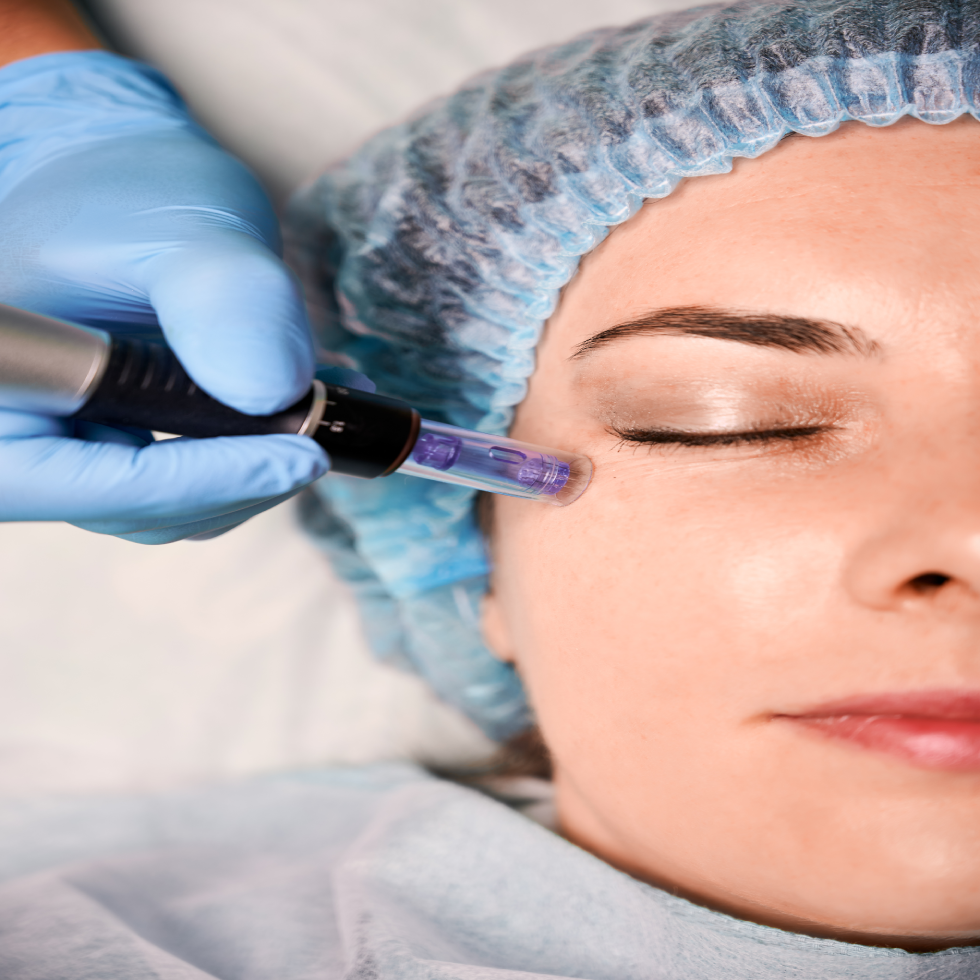
Microneedling is a procedure that uses very fine needles to create microscopic holes in the skin’s surface. These micro-injuries trigger the skin’s natural repair mechanism and increase the production of collagen and elastin. Microneedling focuses more on improving skin texture, reducing superficial wrinkles, skin blemishes, and superficial scars.
Compared to subcision, microneedling involves a shallower depth of the skin and is more commonly known as a general skin rejuvenation procedure. It can be used alone or in conjunction with mesotherapy, PRP, or therapeutic serums.
Mechanism of action of subcision and microneedling
Mechanism of action of subsidence
The mechanism of action of subcision is based on direct intervention in the structure of the scar. In indented scars, fibrotic bands formed by chronic inflammation or acne connect the skin to the deeper layers and prevent it from returning to the normal surface. In the subcision method, a special needle is inserted horizontally into the subdermal layer and mechanically cuts these fibrotic bands.
The severing of these connections releases the skin and reduces the downward traction force, resulting in an immediate elevation of the scar surface. In addition, the creation of controlled trauma and mild bleeding in the treatment area activates a targeted inflammatory response. This inflammatory response is accompanied by the release of growth factors, increased fibroblast proliferation, and stimulation of new collagen synthesis. Ultimately, the space created under the scar gradually fills with new connective tissue, resulting in a lasting improvement in the appearance of the skin.
Mechanism of action of microneedling
The mechanism of action of microneedling is based on the creation of controlled micro-damages on the skin surface. The fine needles of the microneedling device create very small holes in the epidermis and superficial layers of the dermis, which activate the skin’s natural healing pathway without significant tissue damage.
These micro-injuries stimulate the various phases of wound healing, including inflammation, proliferation, and remodeling. In this process, growth factors are released and fibroblast activity increases, resulting in increased collagen and elastin production. Unlike subcision, microneedling does not directly affect deep fibrotic bands, but by improving the structure of the dermis and increasing skin thickness and elasticity, it helps to gradually improve superficial scars and overall skin quality.
To see the results of the patients, we suggest you visit Dr. Reza Moeini’s Instagram page .
Clinical applications of subcision and microneedling
Subsidence Applications
Subcision is specifically used to treat deep acne scars, surgical scars, and some deep wrinkles. It is most effective in patients with scars that are adherent and resistant to superficial treatments.
Applications of microneedling
Microneedling is most commonly used for skin rejuvenation, improving fine lines, blemishes, enlarged pores, and superficial scars. It is a good option for patients looking for an overall improvement in skin quality and who do not have deep scars.
Comparison of the depth of effect in subcision and microneedling
One of the most important differences between subcision and microneedling is their depth of penetration into the skin and the layers they affect. Subcision directly targets the fibrotic band structure of the scar by penetrating the deeper layers of the dermis and subdermis. This depth of penetration allows the physician to correct indented and adherent scars that are resistant to superficial treatments. As a result, subcision is considered an ideal choice for deep scars and crease lines that do not improve with superficial methods.
In contrast, microneedling focuses primarily on the epidermis and superficial dermis. The tiny needles of microneedling create controlled microchannels that gradually stimulate the production of collagen and elastin. This process helps improve the surface structure of the skin, reducing open pores, fine lines, and superficial scars. Due to the shallower depth of penetration, microneedling alone has limited effectiveness on deep or adherent scars.
The difference in depth of effect between the two methods plays an important role in treatment decisions. In general, if the goal is to correct deep and prominent scars, subcision will be the primary choice; however, if the goal is to improve overall skin quality, reduce fine lines, and resurface the dermis, microneedling is more appropriate. In many modern treatment protocols, a combination of these two methods is recommended to achieve optimal results, as each has its own strengths and complements the other.
Clinical effectiveness and selection of the appropriate method
The clinical effectiveness of subcision and microneedling depends on several factors. For deep, adherent scars, subcision provides immediate and more lasting correction by creating structural changes in the deeper layers. While microneedling provides gradual and sustained improvement in superficial scars and overall skin quality by stimulating the natural collagen production process.
Individual factors such as skin type, age, previous treatment history, and the body’s healing response also play a role. In patients with thick skin and a need for rapid correction of indented scars, subcision is the preferred option, but for sensitive or vulnerable skin, microneedling is more suitable with the lowest risk of complications.
In general, subcision and microneedling complement each other , and many treatment protocols use a clever combination of them to achieve optimal results. For example, performing microneedling after subcision can simultaneously enhance the deep and superficial effect, maximizing tissue regeneration and skin aesthetics.
Side effects and safety
Subcision may be associated with side effects such as bruising, swelling, and temporary pain, which usually resolve within a few days to a week. In contrast, microneedling causes milder side effects such as temporary redness and burning. In terms of safety, both procedures are safe and reliable when performed by a qualified physician.
Number of sessions and durability of results
With subcision treatment, the number of sessions is usually fewer but the intervals between sessions are longer. Subcision results are often more permanent, with significant improvement seen after completion of treatment. Microneedling requires more sessions, and results appear gradually over time.
Choosing the right method based on skin type and scar
The choice between subcision and microneedling should be based on a careful assessment of the type of scar, the depth of the lesion, and the patient’s skin condition. For deep scars, subcision is the first choice, while for superficial skin problems, microneedling is a more logical option.
Conclusion
In conclusion, it can be said that the scientific comparison of subcision and microneedling shows that these two methods, despite the common goal of improving the appearance and quality of the skin, have fundamental differences in terms of mechanism of action, depth of penetration, and clinical application. Subcision, as a deep and structure-oriented method, plays an important role in the treatment of indented and adherent scars and produces significant and lasting improvement by releasing fibrotic bands and stimulating collagen formation in the deep layers of the skin.
In contrast, microneedling focuses more on superficial skin regeneration, activating the skin’s natural healing process by creating controlled micro-injuries. This method is particularly effective in improving superficial scars, fine lines, enlarged pores, and improving the overall quality of the skin. Therefore, microneedling is a good option for patients seeking general skin rejuvenation and correction of superficial problems.
Based on the available scientific evidence, one of these two methods cannot be considered absolutely superior to the other. The choice between subcision and microneedling should be based on the type and depth of the scar, the patient’s skin characteristics, previous treatment history, and treatment goals. In many cases, a combined approach involving subcision for deep scar correction and microneedling for superficial skin improvement and texture results in the best treatment outcomes.
Ultimately, informed decision-making and individualized treatment planning under the supervision of a dermatologist play a key role in achieving safe, lasting, and satisfactory results. The combination of scientific knowledge, clinical experience, and the correct choice of treatment method is the basis for success in scar treatment and skin rejuvenation using subcision and microneedling.