



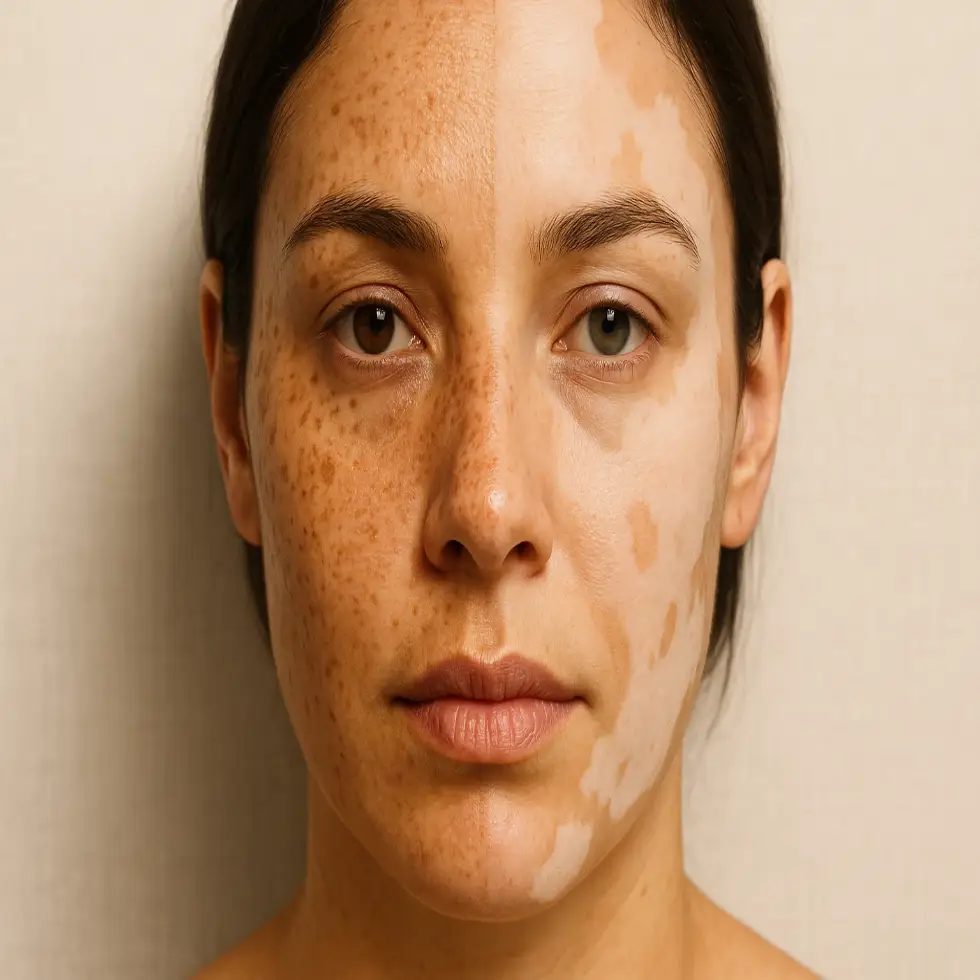
Skin discoloration is one of the most common skin concerns that people of all ages may face. These changes can range from small, scattered spots to the most widespread pigment disorders such as vitiligo. Scientific understanding of these changes will not only help improve treatments, but also play a key role in their prevention and management.
Human skin is of great importance due to its protective and aesthetic role. Skin discoloration, often referred to scientifically as hyperpigmentation (darkening of the skin) and hypopigmentation (lightening of the skin), can be the result of genetic, environmental, immune, or metabolic factors. Among the most common skin discolorations are spots, freckles, and lentigines.
Skin discoloration is not only of aesthetic importance, but can also indicate internal disorders or systemic diseases. Therefore, a scientific and comprehensive study of this topic is doubly important.
The scientific basis of skin color
Human skin color is mainly caused by the presence of three main types of pigments:
Melanin: A brown to black pigment produced by melanocytes and responsible for protecting the skin from ultraviolet (UV) damage.
Carotenoids: Yellow to orange pigments that enter the body through the diet and are stored in the skin.
Hemoglobin and oxyhemoglobin: The red to pink color of the skin, which results from blood flow in the skin.
Changes in any of these pigments or their abnormal distribution can lead to changes in skin color. Increased melanin production causes hyperpigmentation, and a decrease or destruction of melanocytes can lead to hypopigmentation.
Types of skin discoloration
Skin discoloration is divided into two general categories:
- Hyperpigmentation – increased pigmentation and darkening of areas of the skin.
- Hypopigmentation – a decrease in pigment and lightening or whitening of areas of the skin.
Each of these two categories includes a number of disorders that vary in their cause, severity, and distribution pattern. Below, we will examine the important and common types:
1. Spots and Melasma
Melasma is one of the most common forms of hyperpigmentation, seen more often in women, and usually appears on sun-exposed areas such as the cheeks, forehead, nose, and upper lip.
Features:
- It is brown to gray in color.
- It is often symmetrical (similar on both sides of the face).
- It is caused by a combination of hormonal factors, sunlight, and genetics.
Causes:
- Hormonal changes during pregnancy (which is why it is sometimes called the “pregnancy mask”).
- Use of birth control pills or hormonal treatments.
- Exposure to ultraviolet (UV) radiation.
- Hereditary background and skin type (more common in darker skin tones).
Treatment:
Sun protection is the most important measure. Using sunscreen, lightening creams (such as hydroquinone or azelaic acid), and exfoliants, along with laser treatments under expert supervision, can be effective.
2. Solar Lentigines
These spots, sometimes called age spots or sun spots, are caused by chronic exposure to sunlight.
Features:
- They are usually seen in older people and in exposed areas of the body (face, hands, arms, shoulders).
- They are light to dark brown in color and are often harmless but aesthetically disturbing.
Treatment:
Lightening creams, chemical peels, and Q-switched laser or IPL are effective in reducing their appearance. Prevention with daily sunscreen is more important than treatment.
3. Post-Inflammatory Hyperpigmentation (PIH)
This type of discoloration occurs after skin injury or inflammation, such as after acne, burns, scratches, or invasive skin treatments.
Features:
- It develops at the site of a previous wound or inflammation.
- It is more common in darker skin tones.
- Its color varies from brown to gray.
Mechanism:
During the repair process, melanocytes become overactive and produce excess melanin, which accumulates in the epidermis or dermis.
Treatment:
Gentle exfoliation, anti-blemish creams, antioxidant compounds (such as vitamin C) and sometimes special lasers. At the same time, treating the underlying cause of the inflammation is essential.
4. Freckles
Freckles, or aphelioids, are small brown spots that appear due to genetics and sun exposure.
Features:
- They are more common in fair-skinned people and people with red or blonde hair.
- They usually become darker in the summer and lighter in the winter.
Cause:
- Local increase in melanin production in normal melanocytes (not an increase in cell number).
Treatment:
They are generally harmless and do not require treatment, but the use of sunscreen and, if desired, pigment lasers can fade them.
5. Vitiligo
Vitiligo is a hypopigmentation disorder and, unlike the previous cases, is caused by the destruction or inactivation of melanocytes.
Features:
- Milky white spots with a clear border.
- It can occur on any area of the body, especially on the hands, face, and around the mouth.
- It may be associated with other autoimmune diseases (such as autoimmune thyroiditis or type 1 diabetes).
To see patients who have been treated for skin diseases before and after treatment, visit Dr. Reza Moeini’s Instagram page.
Mechanism:
The body’s immune system mistakenly attacks and destroys melanocyte cells.
Treatment:
Phototherapy (Narrowband UVB), topical immunosuppressant drugs (such as tacrolimus), new JAK inhibitor therapies, and in certain cases, melanocyte cell transplantation.
6. Albinism
Albinism is a congenital genetic disorder in which the body is unable to produce melanin or produces very little of it.
Features:
- The skin, hair, and eyes are very light.
- The skin is very sensitive to sunlight.
- It is often associated with vision problems.
Cause:
Mutations in genes related to the enzyme tyrosinase (which plays a role in the melanin production pathway).
Treatment:
There is no definitive cure, but using sunscreen, sunglasses, and special skin care are vital to preventing skin cancer.
7. Post-Inflammatory Hypopigmentation
Unlike PIH, in this case, melanin production is reduced.
Features:
- It develops after skin inflammation (such as eczema or psoriasis).
- It is usually temporary and gradually improves.
Treatment:
Moisturizers, mild anti-inflammatory creams, and phototherapy in resistant cases.
8. Discoloration caused by drugs or chemicals
Some medications, such as amiodarone, minocycline, chloroquine, and antimalarials, can cause skin discoloration. Repeated exposure to chemicals, such as phenol or hydroquinone in high concentrations, may also cause permanent hypopigmentation.
Treatment:
Discontinuation of the triggering factor and supportive treatment to restore normal skin color.
9. Discoloration due to systemic diseases
Some internal diseases cause skin discoloration:
Addison’s disease: Increased melanin and darkening of the skin, especially in the folds.
Hemochromatosis: Iron accumulation in the skin causes a bronze color.
Liver diseases: Jaundice caused by increased bilirubin.
Vitamin B12 deficiency: Sometimes causes light spots.
Skin discoloration encompasses a wide range of disorders, from superficial and harmless changes to complex diseases with a genetic or immune basis. Accurate identification of the type of discoloration is crucial for choosing the right treatment and preventing recurrence.
Other skin color changes
Erythema (redness of the skin): caused by increased blood flow or inflammation. Examples: active acne, dermatitis.
Cyanosis (blue skin): caused by lack of oxygen in the blood. Example: heart or lung diseases.
Jaundice: caused by impaired liver function and bilirubin accumulation.
Uneven or mixed skin tone: A combination of hyperpigmentation and hypopigmentation, usually seen in chronic diseases or extensive vitiligo.
Factors affecting skin color change
Skin discoloration is influenced by a combination of internal and external factors that can be divided into four main categories: genetic, environmental, hormonal and metabolic, and immune. Each of these factors affects melanocyte activity and melanin production in some way.
Genetic factors
The influence of genetics on skin tone: Genes determine the natural amount of melanin in the skin and play a role in a person’s sensitivity to sunlight and the development of spots.
Genetic disorders: Genetic mutations can cause albinism (lack or absence of melanin) or increase the risk of vitiligo.
Inheritance patterns: Some pigment disorders are transmitted in an autosomal dominant or recessive manner and can be seen in different generations of a family.
Environmental factors
Sunlight: Ultraviolet radiation (UVA and UVB) is one of the most important external factors. UV radiation activates melanocytes, increasing melanin production and its accumulation in keratinocytes. This mechanism naturally protects the skin from radiation damage, but it can lead to sunspots and melasma.
Air pollution: Particulate matter and pollutants can increase melanin production and cause skin darkening by causing oxidative stress and skin inflammation.
Chemicals and medications: Prolonged exposure to certain industrial chemicals, heavy metals, dyes, or taking certain medications (such as tetracycline, antimalarials, hormonal medications) can cause skin discoloration.
Heat and artificial light: Continuous use of tanning beds or UV lamps can also create a similar effect to sunlight.
Hormonal and metabolic factors
Hormones: Hormonal changes, especially in women, can affect melanin production. Melasma is a common example of a hormonal disorder that is common during pregnancy or the use of hormonal medications.
Thyroid and adrenal gland disorders: Some diseases, such as hypothyroidism or Addison’s disease, can cause hyperpigmentation or hypopigmentation.
Liver and metabolic diseases: Liver dysfunction can lead to yellowing of the skin and a buildup of bilirubin. Vitamin deficiencies, such as B12 or zinc, can also lead to hypopigmentation.
Nutrition: A poor diet and a lack of antioxidants or vitamins may reduce the skin’s ability to repair damage and produce balanced melanin.
Safety factors
Autoimmune disorders: Diseases such as vitiligo are caused by the immune system attacking melanocytes, leading to white patches on the skin.
Chronic inflammation: Inflammatory skin conditions (such as eczema and psoriasis) can cause hyperpigmentation or hypopigmentation over time.
Oxidative stress and inflammatory factors: Free radicals from environmental stress or systemic diseases can damage melanocytes and cause discoloration.
Methods for diagnosing skin discoloration
Accurate diagnosis of the type of skin discoloration is essential to choose the appropriate treatment method:
- Clinical examination and lesion assessment
- Dermoscopy for pigment pattern
- Skin biopsy in complex cases
- Blood tests for hormonal, autoimmune, and metabolic factors
Therapeutic approaches
Treating blemishes
Sun protection, lightening creams, chemical peels, and laser therapy in resistant cases.
Treatment of vitiligo
Corticosteroid creams, phototherapy, JAK inhibitor drugs, and skin grafts.
Combined approaches and psychological support
Psychological counseling, support groups, and patient education to manage stress and increase self-confidence.
Prevention and management
- Daily use of sunscreen
- Avoiding sunlight during peak hours
- Skin care against chemicals and mechanical damage
- Healthy diet
- Timely management of PCOS and other disorders
Conclusion
Skin discoloration is not just a cosmetic issue; it is a reflection of cellular function, immunity, and physiology. Each type of discoloration—from superficial blemishes to autoimmune diseases like vitiligo—sends a message about the health of the skin and even the overall health of the body.
From a scientific perspective, understanding the precise mechanisms of pigment production and degradation is one of the main keys to designing targeted and effective treatments in the future. Today, we know that melanocyte cells are not only color producers, but also play a role in the skin’s immune and defense responses. Therefore, any disruption in their function can have both cosmetic and physiological effects.
With recent advances in dermatology, the future of treatments for pigment disorders looks bright. New research in stem cells, gene therapy, and drugs that modulate immune pathways has brought new hope for restoring skin color balance.
Ultimately, public awareness and proper education about preventing skin discoloration, consistent use of sunscreen, and early referral to dermatologist Dr. Reza Moeini are the best tools for maintaining healthy and even skin tone.
Healthy skin is not just a sign of beauty, but also a reflection of inner health and harmony of the body with its environment — and scientific understanding of the phenomenon of skin discoloration is the first step towards achieving this harmony.
If you are interested in specialized content on vitiligo treatment, we suggest you check out Azargah magazine .