



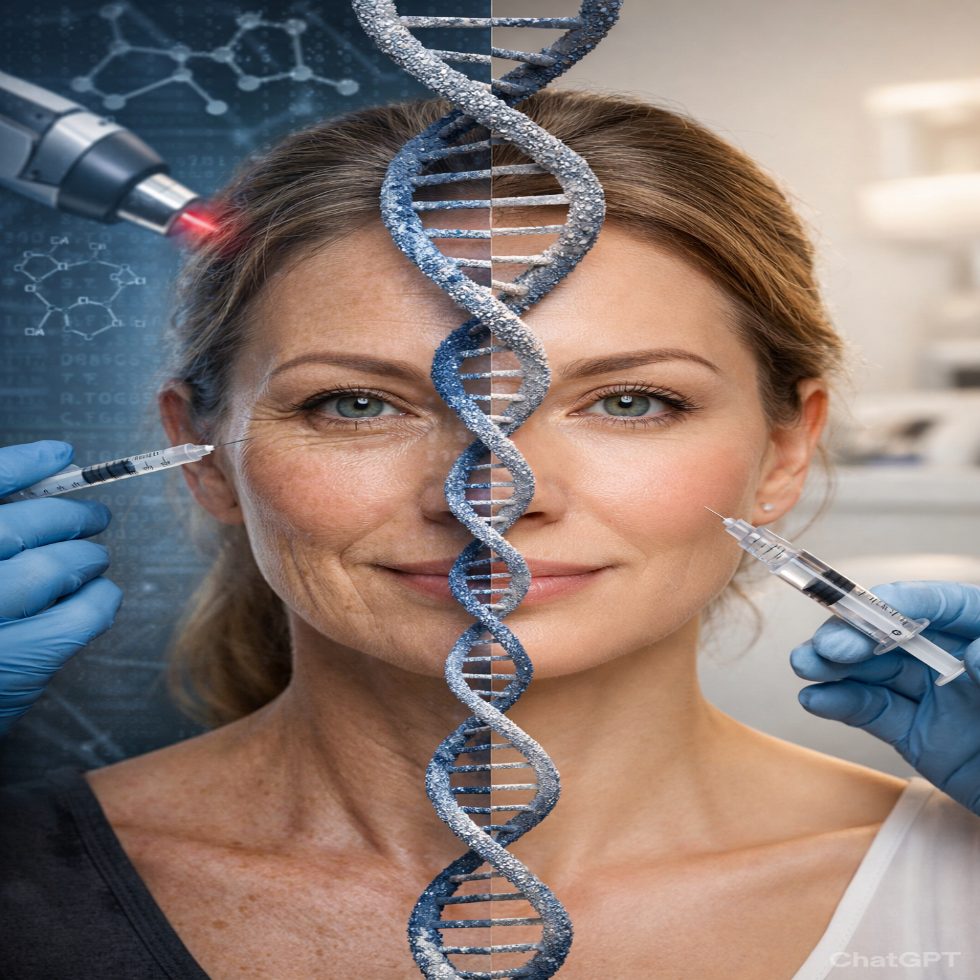
In recent years, cosmetic skin treatments such as lasers, Botox injections, fillers, hypnotherapy and other rejuvenation procedures have become one of the most popular ways to improve your appearance and boost your self-confidence. However, one of the most important questions that many people have is why the results of these treatments vary from person to person. Some people get amazing results, while others show an average or even poor response to the same treatment. The answer to this difference, in many cases, comes down to one fundamental factor: genetics .
In this article from Dr. Reza Moeini’s website , we will fully examine the impact of genetics on skin cosmetic treatments and explain why each individual’s genetic structure can play a decisive role in the outcome of cosmetic treatments.
What are genetics and how do they affect the skin?
Genetics refers to the set of biological information stored in the DNA structure of each individual. This information is inherited from parents and plays a fundamental role in determining the physical and functional characteristics of the body. The skin, as the largest organ of the body, is also strongly influenced by genetic factors.
In fact, genes are the instructions that determine how skin cells grow, how much protein they produce, how they respond to damage, and how quickly they repair themselves. This is why skin characteristics like color, thickness, oiliness, sensitivity, and even how quickly they age vary from person to person.
The role of genetics in determining skin structure
One of the most important influences of genetics is determining the basic structure of the skin. Genes determine:
-
How thick are the layers of the skin?
-
How strong is the skin?
-
What is the density of collagen and elastin fibers?
Collagen and elastin are two vital proteins responsible for the strength, elasticity, and youthfulness of the skin. People who are genetically predisposed to produce higher levels of collagen tend to have firmer, younger-looking, more resilient skin, and are less likely to develop sagging and wrinkles.
In contrast, people whose genetics have programmed them to produce less collagen may experience signs of aging sooner.
The impact of genetics on the speed of skin repair and regeneration
One of the most important factors that determines the success of cosmetic treatments is the skin’s ability to repair and regenerate. This ability is largely controlled by genes.
After undergoing treatments such as laser, microneedling, or peels, the body begins a healing process. In this process, new cells are produced and collagen production increases.
People with stronger genetics for repair:
-
They recover faster.
-
Experience less inflammation
-
They get better and more lasting results.
While in some people, the healing process is slower and they may require more treatment sessions.
The role of genetics in the skin’s response to inflammation
Inflammation is a natural response to injury and plays an important role in the healing process. However, the severity and duration of inflammation varies from person to person, and this is also linked to genetics.
Some people are genetically predisposed to more severe inflammation. This can cause:
-
Skin redness lasts longer
-
Inflation is higher.
-
The recovery process will take longer.
In contrast, people with a more balanced inflammatory response typically have shorter recovery times and better outcomes.
The influence of genetics on the amount of skin pigment production
Genes also determine the amount of melanin produced. Melanin is the pigment that determines skin color and protects the skin from environmental damage.
This factor can affect the skin’s response to treatments such as lasers. For example, some skin types may be more susceptible to pigment changes.
The role of genetics in the skin aging process
One of the most important influences of genetics is determining how quickly the skin ages. Genes determine:
-
When does collagen production decrease?
-
When do wrinkles appear?
-
When does skin become saggy?
This is why some people have younger-looking skin even at an older age, while others experience signs of aging sooner.
To see the results of the patients, we suggest you visit Dr. Reza Moeini’s Instagram page .
Why is the influence of genetics important in skin cosmetic treatment?
Understanding the influence of genetics helps the doctor to:
-
Choose the best treatment method
-
Determine the appropriate number of sessions.
-
Predict more realistic outcomes
This is one of the reasons why beauty treatments should be completely individualized and specific.
The role of genetics in collagen production
One of the most important factors in the success of cosmetic treatments is the level of collagen production in the skin. Collagen is a protein that is responsible for the strength, flexibility, and youthfulness of the skin.
Many beauty treatments such as:
-
Laser
-
Hypnotherapy
-
Fractional RF
-
Microneedling
They work by stimulating collagen production.
But the amount of collagen production is not the same in different people.
People with stronger genetics:
-
They produce more collagen
-
They get faster and better results.
-
The results are more durable.
People with weaker genetics:
-
Collagen production is lower.
-
The results are weaker.
-
Need more meetings
The impact of genetics on the outcome of laser treatment
Laser is one of the most common cosmetic procedures used for:
-
Rejuvenation
-
Stain removal
-
Acne scar removal
-
Hair removal
It is used.
But people respond differently to lasers.
Genetic factors affecting laser response:
1. Skin color
People with fair skin usually respond better to some lasers.
2. Speed of skin repair
People with strong repair genetics:
-
They recover faster.
-
They get better results.
3. Genetic inflammation levels
Some people are genetically predisposed to more inflammation, which can affect the outcome of treatment.
The impact of genetics on Botox results
Botox is one of the most popular methods of reducing wrinkles and rejuvenating the skin. However, experience has shown that Botox results vary from person to person, and one of the most important factors determining this difference is genetics.
1. Botox metabolism and breakdown rate
Genes can determine how quickly Botox is metabolized and broken down in the body. Some people are genetically predisposed to have a more active metabolic system, meaning that Botox is broken down more quickly in their bodies and the effects last less long. Conversely, people with slower metabolisms will have longer and more consistent effects.
2. Facial muscle strength
The strength and structure of facial muscles is also largely genetic. People with stronger muscles may need a higher dose of Botox to fully reduce wrinkles. In contrast, people with weaker muscles, even lower doses of Botox can have a significant effect.
3. Nervous muscle response
Botox works by blocking the nerve signal between the nerve and the muscle. The intensity of this nerve response can also be influenced by genetics. Some people are naturally more sensitive and get a stronger response with a standard dose of Botox, while others show a lesser response.
4. The aging process and skin genetics
The rate at which wrinkles develop and the structure of the skin are influenced by genetics. In people whose genetics cause more collagen production and firmer skin, Botox has a more natural and lasting effect. In contrast, in people whose skin genetics cause premature collagen loss and sagging, the effect of Botox may be less noticeable or require repeated sessions.
5. The importance of expert advice
Due to genetic differences, specialist advice is essential before Botox injections . A doctor can determine the appropriate dose and injection site by examining skin type, muscle structure, and medical history to achieve the best results with high safety.
The impact of genetics on filler injection results
Fillers for:
-
Volumetric
-
Rejuvenation
-
Facial shape correction
They are used.
But results vary from person to person.
Genetics determine:
-
Filler decomposition rate
-
Body reaction to filler
-
Durability
Some people absorb filler faster.
The impact of genetics on the skin repair process
One of the most important factors in the success of cosmetic treatments is the skin’s ability to repair itself.
People with strong repair genetics:
-
They recover faster.
-
Have less inflammation
-
They get better results.
In contrast, some people are predisposed to:
-
Oscar
-
Prolonged inflammation
-
Slow recovery
They are.
The role of genetics in the skin aging process
The rate of skin aging varies from person to person.
This difference is largely genetic.
Some people:
-
They get wrinkles later.
Some people:
-
They experience signs of aging earlier.
This factor has a direct impact on the results of cosmetic treatments.
Why do some people get extraordinary results?
The answer to this question is a combination of several genetic factors:
-
High collagen production
-
Quick repair
-
Appropriate response to inflammation
-
Proper skin structure
These people usually get impressive results.
Can the impact of genetics on skin beauty treatments be compensated for?
Although genetics cannot be changed, results can be improved by choosing the right method.
Solutions:
Choosing the right method
Your doctor can choose the best method based on your skin type.
Conduct more meetings
Some people need more sessions.
Proper care after treatment
Proper care can have a big impact.
Healthy lifestyle
Influencing factors:
-
Proper nutrition
-
Get enough sleep
-
No smoking
The importance of choosing a specialist doctor
One of the most important factors for success is choosing an experienced doctor.
A specialist doctor can:
-
Check your skin type.
-
Choose the best method.
-
Maximize the result
Will genetic testing help with cosmetic treatments in the future?
Medicine is moving towards personalization.
In the future, genetic tests could:
-
Predict response to treatment
-
Determine the best method.
This is the future of aesthetic medicine.
Other factors affecting treatment outcome
In addition to genetics, the following factors are also influential:
-
Age
-
Lifestyle
-
Skin care
-
Doctor’s skills
-
Device type
How to get the best results from skin beauty treatments?
Given the impact of genetics on skin beauty treatments, choosing the right method for each individual is of great importance. The first and most important step is to have a specialized consultation with a doctor to carefully examine your skin type, genetic conditions, and real needs. This assessment helps to choose the best treatment method with the greatest effectiveness.
Also, observing pre- and post-treatment care, conducting follow-up sessions if needed, and following the doctor’s recommendations play an important role in improving the final result.
If you plan to undergo cosmetic skin treatments, it is recommended that you consult with a specialist before taking any action to select the most appropriate method based on your individual characteristics and achieve the best possible results with high safety.
Conclusion on the impact of genetics on cosmetic skin treatment
The impact of genetics on cosmetic skin treatments is one of the most important factors that can determine the quality and durability of results. Each person’s genetic characteristics, such as the amount of collagen production, the speed of skin repair, and how they respond to inflammation, cause the results of treatments such as lasers, Botox, and fillers to vary from person to person. For this reason, a treatment method may produce excellent results in one person and mediocre results in another.
However, genetics is not the only factor, and factors such as the skill of the doctor, choosing the right method, and observing aftercare also play an important role in the success of the treatment. Referring to a specialist doctor and choosing a treatment that suits your individual conditions is the best way to achieve desired and natural results.
Frequently Asked Questions (FAQ)
Do genetics affect laser results?
Yes, genetics can affect the skin’s response to laser.
Is the duration of Botox genetic?
To some extent, yes. The body’s metabolic rate and genetic characteristics affect the duration of Botox’s effects.
Can the outcome of treatment be predicted?
The doctor can make an approximate prediction, but genetics always make a difference in results.
Can everyone get good results?
Yes, but the rate of results varies based on genetics, care, and treatment method.
If you are interested in the world of beauty and skin health, don’t miss Azargah magazine and benefit from its specialized and practical content.