



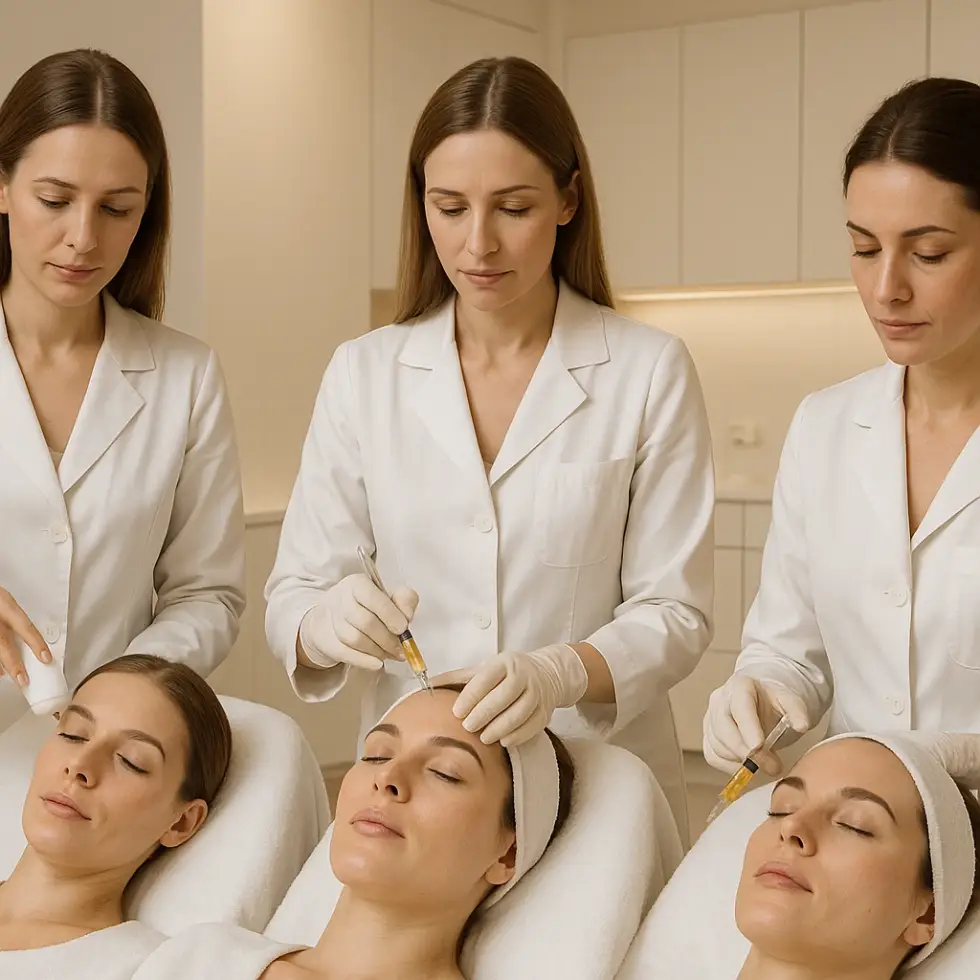
Carboxytherapy, mesotherapy, and PRP (platelet-rich plasma) are among the most popular non-surgical methods for skin rejuvenation, hair strengthening, and localized fat removal. All three methods aim to repair cells and improve the appearance of the skin, but they differ significantly in terms of mechanism of action, results, number of sessions, cost, and applications.
In this article, we will comprehensively examine the difference between carboxytherapy, mesotherapy, and PRP, and explain which method is best suited for your skin needs and conditions.
What is carboxytherapy and how does it work?
Carboxytherapy is a cosmetic treatment that involves injecting carbon dioxide (CO₂) gas under the skin. This gas is harmless and occurs naturally in the body. The introduction of CO₂ into the tissue causes the body to increase blood flow to the area to compensate for the lack of oxygen.
This increased blood supply causes:
- Stimulates collagen and elastin production
- Better nutrition for skin cells
- Local fat breakdown
And improves skin tone and texture.
The most important applications of carboxytherapy
- Removing cellulite and stubborn fat in the abdomen, thighs, arms, and sides
- Facial and neck skin rejuvenation
- Treatment of dark circles and puffiness under the eyes
- Helps heal scars, stretch marks and wounds
- Promotes hair growth in the treatment of hair loss
Carboxytherapy is usually performed in 6 to 10 sessions, with each session taking about 15 to 30 minutes.
What is mesotherapy and how is it different from carboxytherapy?
Mesotherapy is an injection procedure in which a combination of vitamins, minerals, amino acids, and specific medications are injected directly into the middle layer of the skin.
The goal of mesotherapy is to deliver needed nutrients to skin cells to speed up the regeneration and repair process.
Mesotherapy applications
- Treating hair loss and strengthening follicles
- Removing localized fat and cellulite
- Skin rejuvenation and wrinkle reduction
- Skin lightener and removal of superficial blemishes
The difference between carboxytherapy and mesotherapy
Carboxytherapy uses CO₂ gas to stimulate blood circulation, while mesotherapy injects nutrients and medications.
Carboxytherapy is more commonly used to stimulate the body’s natural healing and collagen regeneration, but mesotherapy directly injects active ingredients into the skin.
The effect of carboxytherapy is more physiological and deep, but mesotherapy works locally and targetedly.
Both methods are effective for treating hair loss and skin rejuvenation, but depending on the individual’s needs, the doctor may prefer one or even combine both.
What is PRP and how is it different from carboxytherapy and mesotherapy?
PRP, or Platelet-Rich Plasma, is a method in which a sample of the person’s own blood is taken, and after separating the platelets with a centrifuge, the enriched plasma is re-injected into the skin or scalp.
Platelets contain natural growth factors that cause:
- Increased proliferation of skin cells
- Repair of damaged tissues
- Increased collagen and elastin production
- and stimulate hair regrowth.
To see clients before and after carboxytherapy treatment, visit Dr. Reza Moeini’s Instagram page.
The difference between PRP, carboxytherapy and mesotherapy
In PRP, natural substances from the person’s own body are used, but in mesotherapy, pharmaceutical compounds are injected, and in carboxytherapy, CO₂ gas is injected.
The effect of PRP usually appears later (2 to 3 months), but is longer lasting.
Carboxytherapy is more commonly used to remove cellulite, dark spots, and localized fat, while PRP is more effective for cellular rejuvenation and regeneration.
In some cases, doctors recommend combining PRP with mesotherapy or carboxytherapy to achieve better results.
Scientific comparison of three methods in terms of performance, durability and application
To choose the best method, we need to know how each of these three methods works and what purpose they are suitable for:
1. Therapeutic goal
Carboxytherapy: Increases blood flow, breaks down fat, and stimulates collagen.
Mesotherapy: Direct nourishment of the skin with active ingredients
PRP: Cellular Regeneration with Natural Growth Factors
2. Durability of results
Carboxytherapy: Results are visible after 3 to 5 sessions and last for about a year.
Mesotherapy: Its effects are seen more quickly, but must be repeated at regular intervals to last.
PRP: Results appear slower, but last longer (about 12 to 18 months).
3. Application areas
Carboxytherapy: under the eyes, abdomen, thighs, arms, face
Mesotherapy: scalp, face, neck, body
PRP: Scalp, face, neck, back of hands
4. Level of aggression and pain
All three methods are considered non-invasive.
Carboxytherapy creates a slight sensation of pressure or warmth.
Mesotherapy and PRP may cause some stinging due to multiple injections, but it is manageable.
Advantages and disadvantages of carboxytherapy compared to mesotherapy and PRP
Benefits of carboxytherapy:
- It is a safe and chemical-free method.
- It naturally stimulates the body to regenerate tissues.
- It is very effective for treating cellulite, dark circles under the eyes, and localized fat.
- Can be used for all skin types and without any age restrictions.
Disadvantages of carboxytherapy:
- Results appear gradually.
- It requires several sessions to achieve the desired result.
- There may be some temporary swelling or redness during the first few sessions.
In contrast, mesotherapy may have faster results, but it is less durable. PRP is also less likely to cause allergies because of the natural nature of the injected materials, but it is more expensive.
Which method is best for you?
The choice between carboxytherapy, mesotherapy and PRP does not depend only on taste or price, but also on skin type, treatment goal, age, health status and lifestyle. Each of these three methods has a specific function and produces the best results for different groups of patients. Below, we will examine in more detail who is best suited for each method and when a combination of these methods is the best choice.
1. Suitable candidate for carboxytherapy
Carboxytherapy is ideal for those looking to improve circulation, reduce localized fat, eliminate cellulite, or eliminate dark circles under the eyes. It is especially beneficial for those who:
They have puffiness or dark circles under their eyes and want to remove them without surgery.
They have fat in certain areas of the body (such as the abdomen, flanks, or thighs) that is resistant to diet and exercise.
Their skin has lost its firmness and elasticity due to aging or weight loss.
They are looking for natural rejuvenation and are concerned about chemical injections.
Carboxytherapy is generally safe for all skin types, with very mild and temporary side effects. It can also be a great option for people who don’t want to make sudden changes to their appearance, as the results are gradual and natural.
2. Suitable candidate for mesotherapy
If your goal is to nourish and strengthen your skin or hair, mesotherapy may be a better option. This method has a rapid effect on skin regeneration and rejuvenation by injecting nutrients, vitamins, hyaluronic acid, and specific medications directly into the middle layer of the skin.
Mesotherapy is especially suitable for people who:
They suffer from dry skin, dullness, or superficial blemishes.
Have thin or thinning hair and want to strengthen hair follicles.
They tend to reduce superficial wrinkles without Botox or fillers.
They want their skin to glow before a special occasion (like a wedding or party).
Mesotherapy is very popular for quick rejuvenation and temporary improvement of the skin’s appearance, but it must be repeated at regular intervals for it to last longer. Doctors usually recommend it as a complementary treatment alongside methods such as PRP or laser.
3. A good candidate for PRP (platelet-rich plasma)
PRP, or platelet-rich plasma, is suitable for people looking for a more radical and lasting treatment. Because the person’s own blood is used, the risk of sensitivity or allergic reaction is almost zero.
PRP is a great option for those who:
- They want to perform deep and natural skin rejuvenation.
- They have severe hair loss or androgenetic alopecia.
- They want to gradually reduce acne scars, scars, or deep wrinkles.
- They tend to use their own body’s natural materials for regeneration.
PRP results are usually visible after 2 to 3 months and last for up to 12 to 18 months. For this reason, many patients use it as a long-term rejuvenation treatment.
4. Combining methods; best results with a multi-step approach
In many cases, a combination of carboxytherapy, mesotherapy, and PRP produces excellent results. Your doctor may use several methods in stages or simultaneously to achieve the best effect. For example:
For complete facial skin rejuvenation: First, a few sessions of carboxytherapy to increase blood flow and stimulate collagen, then PRP for cellular regeneration.
For hair loss treatment: Combining PRP with mesotherapy to strengthen follicles and increase hair thickness.
To eliminate cellulite and tighten body skin: Use carboxytherapy alongside slimming mesotherapy or RF.
These combinations not only enhance the effect of each method, but also create a natural, lasting, and balanced result in the appearance of the skin or hair.
5. How to choose the right method for you?
To choose between these methods, several key factors should be considered:
- What is your treatment goal? (Rejuvenation, localized slimming, hair loss treatment, etc.)
- What is your age and skin condition? (Young skin has different needs than mature skin)
- Do you have a specific illness or take specific medications?
- Do you want to see quick or lasting results?
- Do you have any allergies or a history of allergies?
In general:
- If you want to quickly improve the appearance of your skin → Mesotherapy
- If you want a more natural and gradual effect → Carboxytherapy
- If you are looking for deep and long-lasting repair → PRP
The best decision is made when a specialist examines your condition closely and develops a personalized treatment plan based on the appropriate combination of methods.
Post-treatment care
No matter which method you choose, following aftercare has a major impact on its success:
- Avoid touching or massaging the injected area for 24 hours.
- Drinking plenty of water is recommended in the following days.
- Avoid exposure to the sun or excessive heat (such as a sauna) for two days.
- If there is any redness or minor swelling, use a cold compress.
- Avoid alcohol and smoking for a few days.
Conclusion
Carboxytherapy, mesotherapy, and PRP are all effective and minimally invasive methods for beautifying and rejuvenating the skin.
The main difference between these methods is the type of substance injected, the depth of the effect, and the durability of the results.
If you are looking to increase blood circulation and naturally stimulate the skin, carboxytherapy is a good choice.
If you want to boost cellular nutrition, mesotherapy is more effective.
And if your goal is deep and lasting skin or hair regeneration, PRP is the best option.
Consulting with cosmetic physician Dr. Reza Moeini will help you make the best decision for your specific situation and, with the right choice, achieve younger, healthier, and brighter skin.
If you are interested in specialized and interesting content in the field of beauty and health, we suggest you visit Azargah magazine and benefit from its diverse articles.