


Tattoos are a common way to create permanent designs on the skin, but sometimes people decide to remove their tattoos for various reasons, such as changing tastes, career problems, or medical reasons. In the past, removing tattoos with traditional methods such as dermabrasion, acid, or surgery was associated with a lot of pain and damage. Today, however, laser tattoo removal is recognized as a safe, effective, and minimally invasive method.
Today, with the use of advanced equipment such as Q-switch lasers and fractional lasers, the tattoo removal process is carried out professionally, safely, and without causing deep wounds or scars. Below, we will learn about the full details of these methods.
Why do people seek tattoo removal?
Common reasons include:
Change of taste or personal decision
Job problems or social restrictions
Unsuccessful or poor quality tattoos
Skin problems or allergic reactions
Desire to get a new tattoo on a specific area
How does laser tattoo removal work?
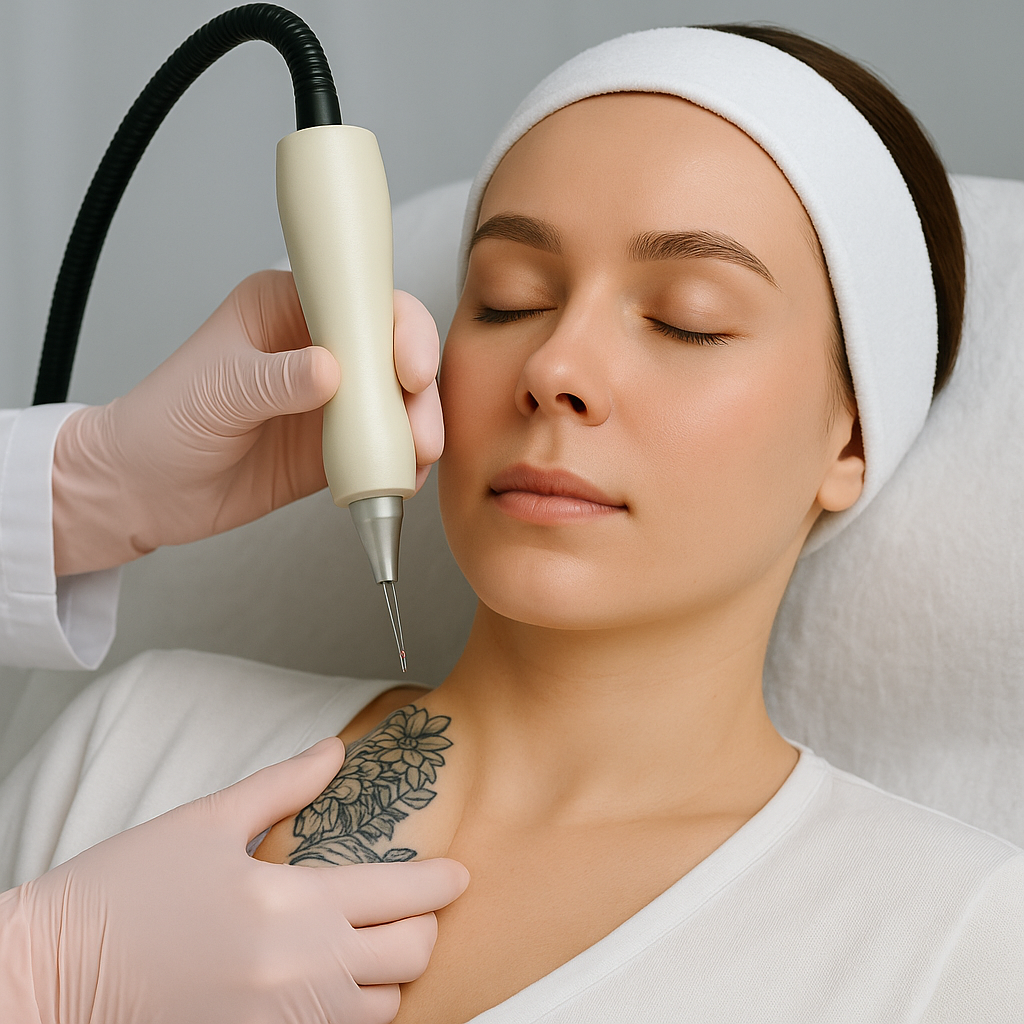
This method uses special laser technology, such as Q-switched Nd:YAG . The high-energy laser beam penetrates the tattoo ink and breaks it into smaller particles. These particles are then absorbed and eliminated by the body’s immune system.
 The laser targets only the ink pigments without damaging the surrounding skin.Advanced lasers can remove different tattoo colors (such as black, blue, red, green).
Types of lasers used for tattoo removal
In medical clinics, appropriate technologies are used depending on the color, depth, and type of skin:
 Q-switch laser (Nd:YAG):
Suitable for dark colors (black, blue, gray)
Deep penetration, suitable for darker skin types
Fractional CO₂ laser or Picosure:
For cleaning bright colors such as red, yellow and green
It also stimulates collagen regeneration and skin repair.
The process of tattoo removal in a medical clinic
1. Initial consultation:
Checking the type, size, and depth of the tattoo and determining the number of sessions
2. Area preparation:
Disinfecting the skin, using numbing cream to reduce pain
3. Laser radiation:
The laser beam moves over the tattoo lines and breaks down the dye particles.
4. Aftercare for laser:
Using anti-inflammatory ointments and avoiding sunlight
Number of sessions required for complete tattoo removal
Depending on the following factors, between 4 and 10 sessions may be needed:
Tattoo ink depth
Ink color (dark colors fade faster)
Tattoo location on the body
The body’s reaction to dye excretion
Type of laser device and operator skill
Is laser tattoo removal painful?
Pain varies depending on the individual’s tolerance threshold, but is usually:
It feels like a superficial burning sensation or a rubber band bump.
A topical anesthetic cream is used.
In some cases, a cooling device is also used.
Benefits of laser tattoo removal
Non-invasive and non-surgical Minimal damage to surrounding skin Suitable for all skin types and tattoo colors No need for stitches or heavy dressings Gradual and natural healing without creating excess flesh
Possible complications and aftercare after laser treatment
Common and temporary side effects:
Redness and swelling for up to 24 hours
Minor peeling
Sensitivity to light
Aftercare after laser treatment:
Using healing creams (such as zinc oxide or Bepanthen)
Avoid direct sunlight for a few days.
Do not use cosmetics or strong detergents on the treatment area.
Use a cold compress for inflammation
The difference between laser tattoo removal and traditional methods
| Traditional method | Common problems | New laser therapy |
|---|---|---|
| Dermabrasion | Severe pain, bleeding | Bleeding-free and controllable |
| Acids and chemicals | Burns, wounds, scars | Non-invasive and without deep scars |
| Surgery | Remaining suture marks | No stitches or surface cracks |
Things that are not suitable for laser tattoo removal
In the following cases, you should be extra careful or consult a doctor:
Pregnancy and breastfeeding
Active skin diseases in the tattoo area
History of keloid scars
Taking blood thinners
Autoimmune diseases and immune deficiency
Why get tattoo removal done at Dr. Reza Moeini’s clinic?
Using the latest Q-switch and fractional laser devices
Experienced treatment team with experience in the field of skin and beauty
Providing individual counseling for each individual before starting treatment
Completely hygienic and standard environment
Positive patient feedback on treatment results and safety
Frequently Asked Questions (FAQ)
What percentage of tattoos are removed?
In many cases, between 80 and 95 percent of the paint is removed, provided the correct device is selected and the steps are followed carefully.
Can colored tattoos be completely removed?
Yes, but red, yellow, and green colors require more sessions and a combination of several types of lasers.
Will there be a scar after laser?
If care is taken and done correctly, there is usually no scar or excess flesh left .
Conclusion
Laser tattoo removal is one of the safest and most effective methods for removing unwanted designs from the skin. At Dr. Reza Moeini’s clinic , this process is carried out systematically using advanced devices and a team of experts so that the patient can enjoy their new skin without pain, without scars, and with acceptable results.
 For specialized advice and to schedule an appointment, contact us or use the online appointment form at drrmoeini.ir .